



%402x.svg)
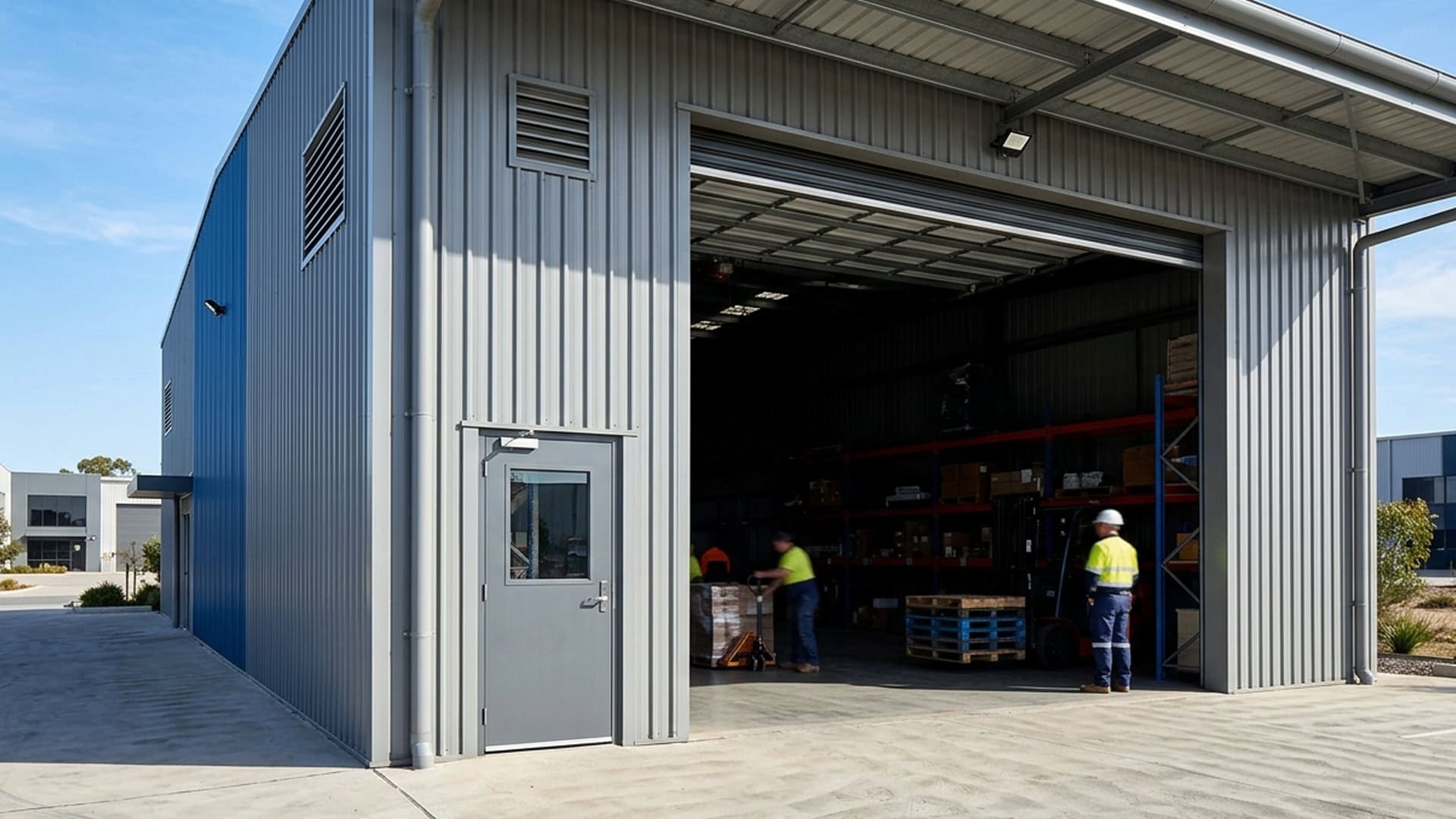

Warehouses rely on doors for daily movement of people, goods, equipment, and emergency egress. Choosing the correct warehouse door size can help support operational efficiency, accessibility, safety, and long-term durability.
While warehouse openings vary significantly depending on the building design and application, there are common warehouse door sizes used throughout Australia for personnel access, emergency exits, plant rooms, and operational areas.
This guide explains standard warehouse door sizes, warehouse access door dimensions, emergency exit requirements, and factors that may influence door selection.
What Are Warehouse Door Sizes?
Warehouse door sizes refer to the dimensions of doors used throughout industrial and storage facilities. These can include:
- Personnel access doors
- Fire-rated doors
- Service and maintenance access doors
- High-traffic access points
- Plant room and utility area doors
The most suitable door size depends on factors such as occupant numbers, building layout, operational requirements, accessibility considerations, and applicable regulations.
For a broader overview of standard door dimensions used across Australia, see our guide to Standard Door Sizes.
Standard Warehouse Door Sizes
When discussing the standard warehouse door size in Australia, personnel access doors are commonly supplied in dimensions based on standard building openings.
| Door Height | Door Width |
|---|---|
| 2040mm | 820mm |
| 2040mm | 920mm |
| 2040mm | 1100mm |
| 2340mm | 920mm |
| 2340mm | 1100mm |
These sizes are frequently used for:
- Industrial warehouses
- Distribution centres
- Manufacturing facilities
- Storage buildings
- Agricultural sheds
- Logistics facilities
Larger widths may be selected where higher occupant movement or operational traffic is expected.
For a detailed breakdown of industrial applications, read Industrial Door Sizes Australia.
Personnel Access Doors for Warehouses
Personnel access doors provide everyday entry and exit for workers, contractors, visitors, and maintenance personnel.
Typical warehouse access door dimensions include:
820mm Wide Doors
Can be suitable for:
- Low-traffic areas
- Storage rooms
- Utility rooms
- Small warehouse facilities
920mm Wide Doors
Often selected for:
- Main staff entrances
- Warehouse access points
- Areas requiring easier movement of people and equipment
1100mm Wide Doors
Can support:
- Higher traffic volumes
- Frequent movement of carts and equipment
- Improved circulation in busy operational environments
The appropriate size will depend on operational requirements, hardware selection, accessibility considerations, and building design.
Common Warehouse Personnel Door Sizes
The most frequently specified warehouse personnel access door sizes are:
- 2040mm x 820mm
- 2040mm x 920mm
- 2040mm x 1100mm
These dimensions are commonly used across industrial facilities throughout Australia.
Emergency Exit Door Dimensions
Emergency exits play a critical role in warehouse safety planning and building design.
Warehouse emergency exit door dimensions vary depending on:
- Occupant load
- Travel distances
- Exit path design
- Building classification
- Applicable regulations
Common emergency exit door widths include:
| Typical Width | Common Applications |
|---|---|
| 820mm | Smaller occupancy areas |
| 920mm | General warehouse exits |
| 1100mm | Higher traffic escape routes |
In many warehouse environments, wider exit doors may be specified where evacuation requirements or occupant numbers justify larger openings.
It is important to note that door width alone does not determine suitability for emergency egress. Door hardware, opening direction, travel paths, signage, and overall exit design can also influence performance.
For more information, see our guide on Fire Doors in Escape Routes.
Warehouse Door Compliance Requirements
Warehouse door requirements can vary depending on the building type, occupancy levels, accessibility considerations, and emergency egress provisions. The National Construction Code access and egress requirements provide guidance on factors that may influence exit design, occupant movement, and accessibility considerations in commercial and industrial buildings.
Factors that may influence door selection include:
Accessibility
Door dimensions and clear opening widths may need to support accessibility objectives and building requirements.
Emergency Egress
Exit doors can be configured to support evacuation pathways where required by the building design.
Fire Separation
Certain warehouse applications may require fire-rated door assemblies depending on wall construction and building design.
Wind Region Requirements
Industrial facilities in cyclone-prone areas may require doors designed for specific regional wind classifications.
Security and Access Control
Hardware options can be configured to support different operational and access control requirements.
Compliance outcomes depend on the complete door assembly, hardware, installation method, and project-specific requirements.
For further guidance, refer to Door Regulations Australia.
Door Sizes for High-Traffic Areas
Busy warehouse environments often experience continuous movement of staff, contractors, visitors, and equipment.
In these applications, larger door widths may provide operational advantages.
Areas Commonly Requiring Wider Doors
- Main warehouse entrances
- Staff access points
- Dispatch areas
- Loading support zones
- Manufacturing facilities
- Distribution centres
Benefits that wider door configurations can support include:
- Improved pedestrian flow
- Reduced congestion
- Easier movement of equipment
- Greater operational flexibility
The most suitable solution depends on the expected traffic volume and facility requirements.
Selecting the Right Warehouse Door
Selecting a warehouse door involves more than simply choosing a width and height.
Important considerations include:
Building Use
Different facilities may have different operational demands.
Traffic Levels
Door sizes can be selected to support expected pedestrian movement.
Environmental Conditions
Some projects may require additional consideration for wind exposure, corrosion resistance, or insulation performance.
Future Growth
Choosing a door configuration that accommodates future operational needs can help reduce later modifications.
Hardware Selection
Locksets, panic hardware, closers, access control systems, and hinges can all influence the final functionality of a door system.
The most effective warehouse door solution is typically determined by considering the complete application rather than the door leaf dimensions alone.
Why Trust Larnec?
Larnec has extensive experience supplying steel-clad warehouse and industrial doors throughout Australia. Our team understands the practical requirements of warehouses, distribution centres, factories and storage facilities, helping customers select doors that suit their operational needs while considering applicable Australian building regulations and standards.
Related Warehouse Door Resources
Choosing the right warehouse door starts with understanding the required opening sizes, operational needs and applicable Australian regulations. Whether you’re designing a new warehouse or upgrading an existing facility, the following guides provide additional information to help you select compliant and practical door solutions:
- Warehouse Door Regulations Australia – Learn about Australian warehouse door regulations, safety requirements and compliance considerations for commercial and industrial buildings.
- Commercial Door Sizes Australia – Discover standard commercial door sizes and understand how they differ from industrial and warehouse door applications.
Need Help Selecting a Warehouse Door?
Choosing the right warehouse door size can help support safety, operational efficiency, and long-term performance.
Larnec offers a range of industrial personnel access door options that can be configured to suit different warehouse environments, traffic levels, and project requirements.
If you’re planning a new warehouse, upgrading an existing facility, or reviewing door specifications, contact the Larnec team for guidance on suitable door options for your application.
Frequently asked questions
Common warehouse personnel access door sizes include 2040mm x 820mm, 2040mm x 920mm, and 2040mm x 1100mm, depending on the application and operational requirements.
Many warehouse facilities use 920mm-wide doors for general personnel access, although 820mm and 1100mm options are also commonly specified.
Emergency exit door widths commonly range from 820mm to 1100mm depending on occupancy levels, building design, and exit requirements.
No. Warehouse door requirements can vary based on building classification, occupancy, accessibility considerations, fire separation needs, and operational demands.
The most suitable size depends on traffic levels, building use, accessibility objectives, hardware requirements, and the overall door application.
920mm is commonly specified for warehouse personnel access doors because it provides a balance between accessibility, operational practicality, and efficient use of space.
Many warehouse door systems can be configured in different widths, heights, hardware options, and finishes depending on project requirements.
Door opening direction depends on factors such as building occupancy, emergency egress requirements, and applicable regulations. Requirements should be assessed for each project individually.
A warehouse access door is generally used for everyday entry and exit, while an emergency exit door forms part of an evacuation pathway and may require different hardware or configurations.