



%402x.svg)
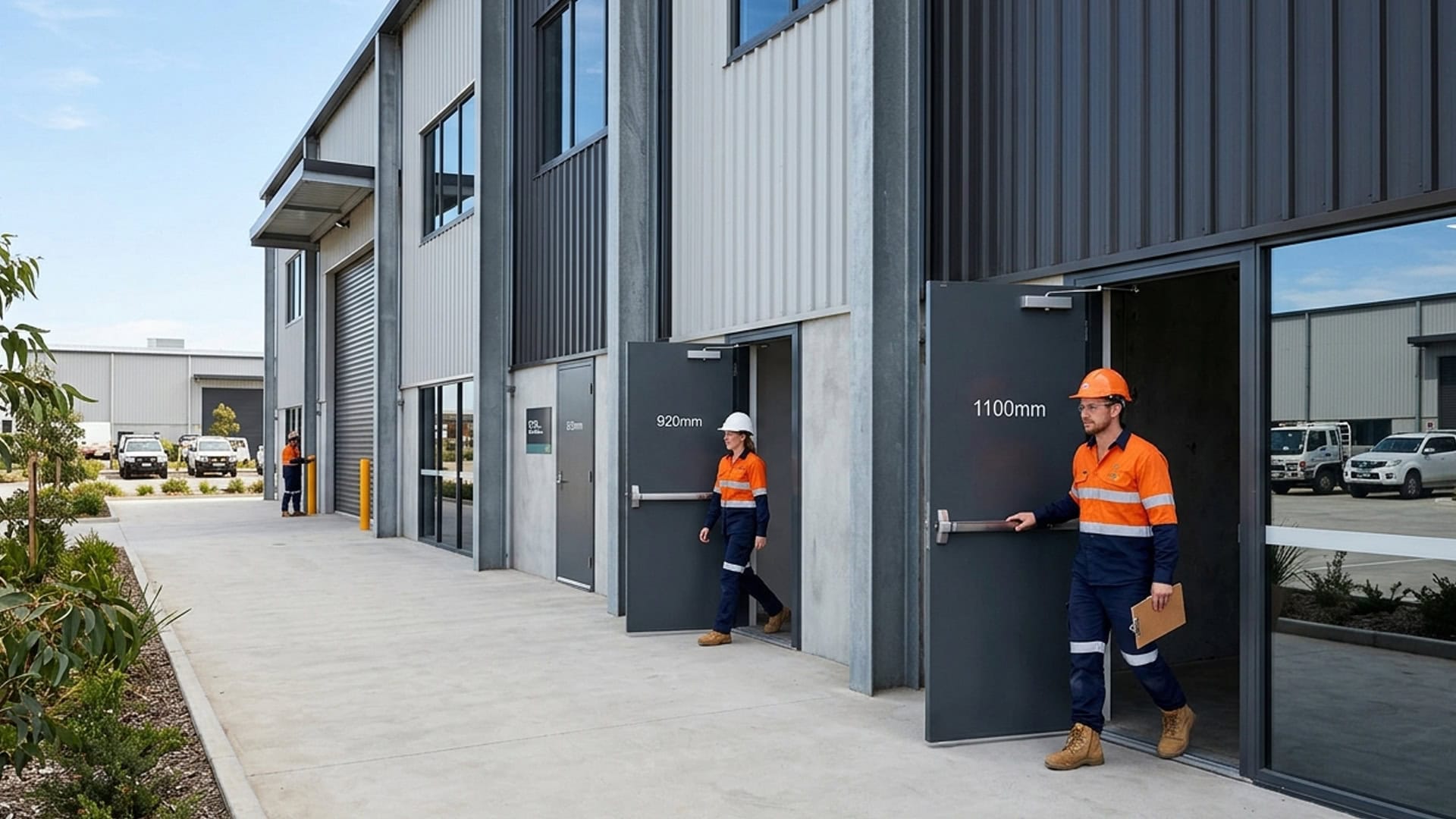

Industrial door sizes play an important role in the functionality, accessibility, and usability of warehouses, factories, workshops, mining facilities, and infrastructure projects across Australia. Selecting the right industrial door dimensions can help support safe movement of personnel, improve operational efficiency, and simplify installation requirements.
While there is no single industrial door size that suits every application, several common dimensions are frequently specified throughout Australian industrial projects. The most suitable size often depends on building use, traffic levels, hardware requirements, accessibility considerations, and site-specific regulations.
In this guide, we’ll explore standard industrial door sizes in Australia, common personal access door dimensions, and factors that may influence door selection for industrial environments.
Standard Industrial Door Sizes
When discussing industrial door sizes Australia, most references relate to personal access doors installed within industrial buildings rather than large vehicle access openings.
Common industrial personal access door dimensions include:
| Door Height | Door Width |
|---|---|
| 2040mm | 820mm |
| 2040mm | 920mm |
| 2040mm | 1100mm |
| 2340mm | 920mm |
| 2340mm | 1100mm |
These sizes are commonly specified across warehouses, manufacturing facilities, storage buildings, agricultural sheds, workshops, and infrastructure projects.
For a broader overview of Australian sizing standards, see our Standard Door Sizes guide.
The ideal industrial door dimensions can vary depending on the intended application, traffic requirements, accessibility needs, and available wall space.
Personal Access Door Dimensions
Personal access doors are designed to provide pedestrian entry and exit within industrial buildings.
Common personal access door sizes include:
820mm Wide Doors
820mm doors are often selected where space efficiency is important and pedestrian traffic is relatively low.
Typical applications include:
- Plant rooms
- Storage areas
- Maintenance access points
- Utility buildings
920mm Wide Doors
920mm wide doors are commonly specified for industrial facilities where greater clearance may be beneficial.
They can help support:
- Movement of equipment and materials
- Higher traffic volumes
- Operational flexibility
1100mm Wide Doors
1100mm personal access doors are frequently used in facilities that require larger clear openings.
Applications may include:
- Warehouses
- Distribution centres
- Industrial workshops
- Infrastructure facilities
The most suitable personal access door dimensions should always be considered alongside hardware selection, building design, and project requirements.
Door Sizes for Warehouses
Warehouse environments often require door sizes that balance accessibility, durability, and operational efficiency.
Common warehouse personal access door sizes include:
- 2040mm x 920mm
- 2040mm x 1100mm
- 2340mm x 920mm
- 2340mm x 1100mm
Larger door widths can provide additional clearance for staff movement and equipment handling while helping support day-to-day operations.
In facilities with frequent pedestrian traffic, wider door configurations may be preferred to improve usability and workflow.
For projects involving both commercial and industrial environments, our Commercial Door Sizes Australia guide provides additional sizing considerations.
Mining and Infrastructure Applications
Mining, energy, transport, utilities, and infrastructure projects often require industrial access doors that can be configured to suit challenging operating environments.
Door dimensions used in these sectors frequently depend on:
- Site-specific engineering requirements
- Wind region classifications
- Hardware specifications
- Building type
- Operational access requirements
Common widths such as 920mm and 1100mm are regularly specified because they can support greater movement of personnel and equipment.
Depending on project requirements, larger door heights may also be selected to improve clearance and accessibility.
Industrial Door Clearance Considerations
Door size selection is not solely determined by the door leaf dimensions.
Clearance requirements can also be influenced by:
Building Design
Structural openings, wall construction, and installation methods can affect the practical size options available.
Hardware Selection
Door closers, panic hardware, access control systems, and locksets may influence effective clear opening dimensions.
Accessibility Requirements
Certain projects may require door configurations that support accessibility objectives and building design considerations.
Traffic Levels
Higher traffic areas often benefit from wider door options that can improve ease of movement.
Equipment Movement
Where tools, carts, trolleys, or operational equipment regularly pass through doorways, larger widths may provide greater flexibility.
For regulatory considerations that may affect sizing decisions, see our guide to Door Regulations Australia.
Choosing an Industrial Door Size
The best industrial door size is usually determined by the intended application rather than a single industry standard.
When selecting an industrial personal access door, consider:
- Building purpose
- Traffic frequency
- Accessibility objectives
- Equipment movement requirements
- Installation environment
- Hardware specifications
- Future operational needs
Many industrial projects choose 920mm or 1100mm wide doors because they can provide additional flexibility for evolving operational requirements.
However, the most appropriate size should always be assessed within the context of the complete building design.
Why Trust Larnec?
Industrial buildings often require durable, purpose-built door solutions that meet demanding operational environments. Larnec has manufactured Australian-made steel-clad industrial doors for decades, supplying projects across manufacturing, mining, agriculture, infrastructure and commercial industries. This guide combines practical industry knowledge with relevant Australian requirements.
Related Industrial Door Resources
Choosing the right industrial door involves considering more than just the opening size. Building regulations, warehouse requirements, accessibility and intended applications all influence the best door solution. The following guides provide additional information to help you select compliant industrial doors for Australian commercial and industrial facilities:
- Warehouse Door Sizes Guide – Discover common warehouse door dimensions, clearance considerations and practical sizing recommendations for industrial buildings.
- Warehouse Door Regulations Australia – Understand warehouse door compliance requirements, safety obligations and regulatory considerations for commercial facilities.
- Personal Access Door Sizes – View common personal access door dimensions and learn how to select the right size for warehouses, factories and industrial buildings.
Industrial Door Solutions for Australian Projects
Industrial buildings often require door systems designed to support demanding operational environments.
Larnec’s Sentry Series industrial personal access doors are available in common industrial dimensions including:
- 2040mm x 820mm
- 2040mm x 920mm
- 2040mm x 1100mm
The range can be configured to suit various warehouse, workshop, shed, infrastructure, and industrial applications depending on project requirements.
To explore available options, visit our Industrial Personal Access Doors range or contact the Larnec team for project-specific guidance.
Frequently asked questions
There is no single standard industrial door size in Australia. Common industrial personnel access door dimensions include 2040mm x 820mm, 2040mm x 920mm, and 2040mm x 1100mm, depending on the building’s intended use and operational requirements.
Industrial personnel access doors are commonly available in widths of 820mm, 920mm, and 1100mm. These sizes are frequently used in warehouses, workshops, factories, storage facilities, and infrastructure projects.
Many warehouses utilise 920mm or 1100mm wide personnel access doors because they can provide additional clearance for staff movement, equipment handling, and day-to-day operations.
920mm is one of the most commonly specified industrial personnel access door widths in Australia. It is often selected because it can provide a practical balance between accessibility, usability, and available wall space.
Not necessarily. The most suitable industrial door size depends on factors such as building layout, traffic frequency, equipment movement, hardware selection, and operational requirements.
Consider building use, traffic levels, accessibility objectives, equipment movement requirements, installation constraints, and hardware specifications when selecting an industrial access door size.
Yes. Industrial door dimensions may vary depending on the facility type, operational needs, site conditions, equipment requirements, and project-specific design considerations.
Many industrial door systems can be configured in different sizes to suit project requirements. Available dimensions may vary depending on the door design, hardware selection, and installation environment.