



%402x.svg)
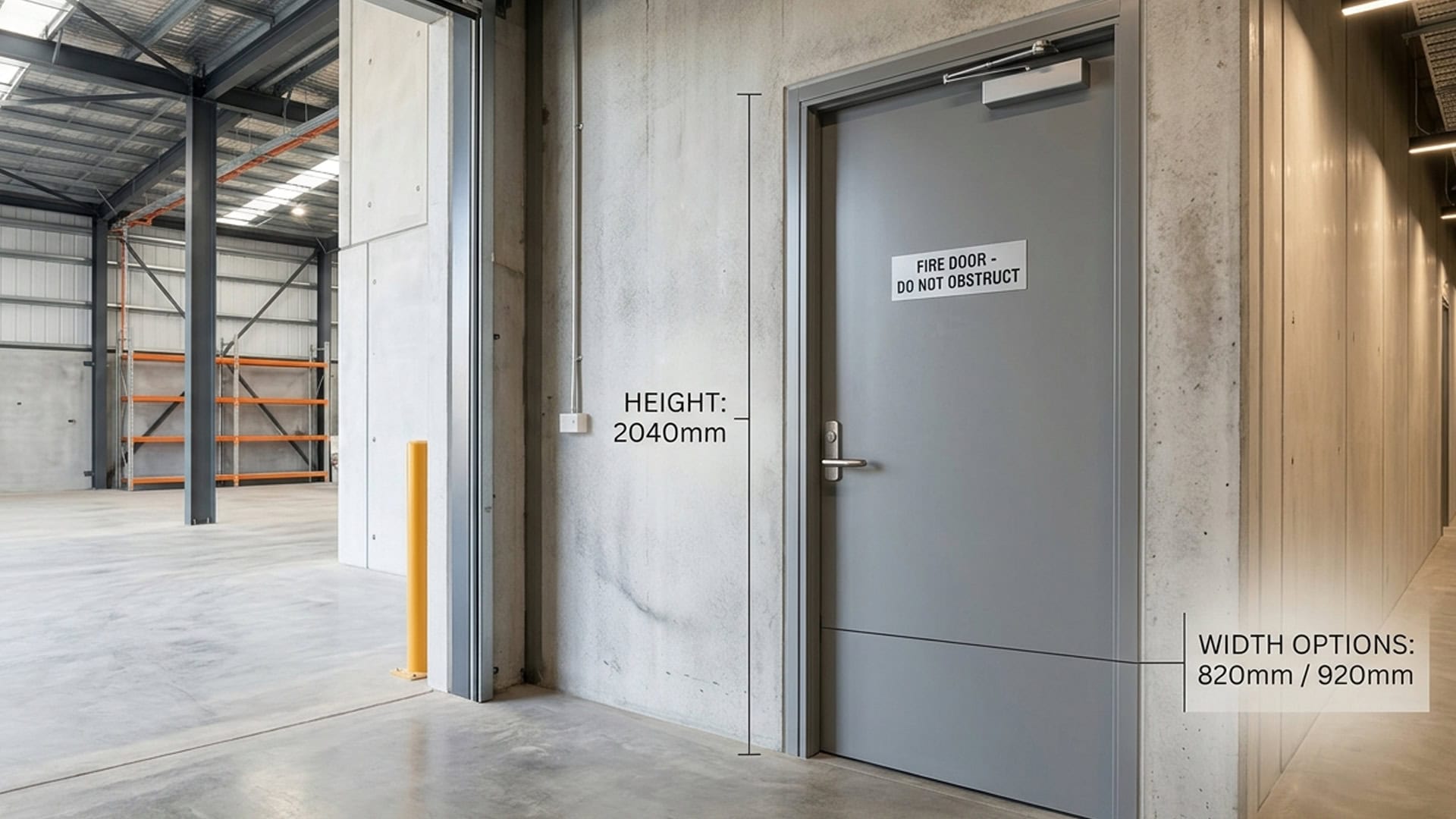

Fire door sizes are an important consideration for commercial buildings, industrial facilities, warehouses, schools, healthcare environments, and many other applications where passive fire protection forms part of the building design.
Understanding common fire door dimensions, available configurations, and installation considerations can help project managers, builders, facility operators, and property owners select a solution that supports their project’s operational and regulatory requirements.
This guide explains standard fire door sizes in Australia, common applications, sizing considerations, and how fire-rated doors can be configured to suit different building environments.
What Are Fire Doors?
A fire door is a specially constructed door assembly designed to help slow the spread of fire and smoke between designated areas of a building for a specified period.
Unlike standard doors, fire-rated door assemblies are tested as complete systems. Performance can vary depending on factors such as:
- Door construction
- Frame design
- Hardware selection
- Seals and accessories
- Installation method
- Fire-resistance level (FRL) requirements
Because performance depends on the complete assembly, door size selection should always be considered alongside the project’s fire engineering and certification requirements.
What Size Are Fire Doors?
One of the most common questions asked by builders and facility managers is:
What size are fire doors?
There is no single fire door size used across all Australian projects.
Instead, fire doors are available in a range of standard and custom dimensions depending on:
- Building type
- Occupancy classification
- Traffic requirements
- Accessibility needs
- Fire separation requirements
- Escape route design
Many projects utilise dimensions that align with standard Australian door sizes, while larger openings may require wider or double-door configurations.
Standard Fire Door Sizes in Australia
The following table outlines common door dimensions often specified across commercial and industrial applications.
| Door Height | Door Width |
|---|---|
| 2040mm | 820mm |
| 2040mm | 870mm |
| 2040mm | 920mm |
| 2040mm | 1020mm |
| 2040mm | 1100mm |
| 2340mm | 920mm |
| 2340mm | 1020mm |
These dimensions may vary depending on manufacturer capabilities, project requirements, and certification constraints.
Many facilities select wider openings where higher pedestrian traffic, equipment movement, or accessibility considerations apply.
Fire Door Dimensions for Commercial Buildings
Commercial projects often require doors that balance fire separation requirements with everyday building operations.
Common examples include:
- Office buildings
- Retail centres
- Educational facilities
- Healthcare environments
- Apartment complexes
- Government buildings
Typical commercial fire door sizes include:
- 2040mm x 820mm
- 2040mm x 920mm
- 2340mm x 920mm
- 2340mm x 1020mm
The final size selected depends on the building layout, occupancy needs, and design requirements.
Commercial Fire Door Sizes and Accessibility
Where accessibility requirements apply, wider door openings may be specified to support movement throughout the building.
Door width alone does not determine suitability. Factors such as hardware selection, clear opening widths, thresholds, and installation details can also influence accessibility outcomes.
Fire Exit Door Sizes Australia
Many people use the terms “fire door” and “fire exit door” interchangeably, but they serve different purposes.
Fire Doors
Designed to assist with compartmentation and passive fire protection.
Fire Exit Doors
Designed to support safe egress from a building during an emergency.
Because of their different functions, size requirements can vary.
Common Fire Exit Door Sizes Australia
Fire exit doors are often available in:
- 2040mm x 820mm
- 2040mm x 920mm
- 2040mm x 1100mm
Higher-occupancy facilities may require larger openings or multiple exits depending on building design and occupant loads.
Standard Fire Rated Door Dimensions
When discussing standard fire rated door dimensions, it is important to remember that certification generally applies to the complete tested assembly rather than the door leaf alone.
A fire-rated assembly may include:
- Door leaf
- Frame
- Hinges
- Closers
- Latches
- Seals
- Vision panels (where applicable)
The maximum or minimum dimensions available may vary between tested systems.
For this reason, early consultation during project planning can help identify suitable configurations for the intended application.
Fire Doors in Warehouses and Industrial Facilities
Industrial environments often present unique operational requirements.
Common applications include:
- Warehouses
- Manufacturing facilities
- Processing plants
- Workshops
- Storage buildings
- Distribution centres
These facilities frequently require wider openings to accommodate:
- Higher pedestrian traffic
- Equipment movement
- Emergency access
- Operational workflows
Common industrial fire door sizes may include:
- 920mm widths
- 1020mm widths
- 1100mm widths
Larger openings can also be configured through double-door arrangements where appropriate.
Single vs Double Fire Doors
The size of the opening often influences whether a single or double-door solution is selected.
Single Fire Doors
Often suitable for:
- Plant rooms
- Service areas
- Offices
- Utility rooms
- Standard access points
Double Fire Doors
Often selected for:
- Warehouses
- Schools
- Hospitals
- Commercial corridors
- High-traffic environments
Double-door configurations can provide greater opening widths while supporting operational flexibility.
The suitability of any configuration depends on the tested assembly and intended application.
Factors That Influence Fire Door Size Selection
Selecting a fire door involves more than simply matching an opening dimension.
Important considerations include:
Building Classification
Different building types may have different fire safety requirements.
Occupancy Levels
Higher occupancy buildings may require larger or additional exit provisions.
Accessibility Requirements
Clear opening widths and circulation requirements may influence door selection.
Operational Requirements
Equipment movement, maintenance access, and traffic flow can affect preferred dimensions.
Fire Engineering Design
Project-specific fire strategies may influence door location, rating, and configuration.
Future Building Use
Selecting a suitable door size today may help support changing operational needs in the future.
Can Fire Doors Be Custom Sized?
Yes. Many fire door systems can be manufactured in various sizes and configurations.
Options may include:
- Wider openings
- Increased heights
- Double-door arrangements
- Vision panels
- Different hardware configurations
- Specialised industrial applications
Available dimensions will depend on the tested door system and certification scope.
Because of this, custom sizing should always be assessed against the requirements of the selected assembly.
Fire Door Costs and Size Considerations
Door size is one factor that can influence project costs.
Other factors include:
- Fire rating requirements
- Hardware selections
- Door construction
- Frame specifications
- Finish requirements
- Installation complexity
- Site conditions
Larger or specialised configurations may involve additional manufacturing and installation considerations.
Fire Doors in Escape Routes
Doors located within designated escape routes often require careful consideration during building design.
Factors that may influence door selection include:
- Occupant movement
- Emergency egress requirements
- Accessibility considerations
- Hardware operation
- Door swing direction
- Building classification
The appropriate size and configuration should always align with the building’s overall fire safety strategy.
Why Trust Larnec?
Fire doors play an important role in protecting buildings and supporting safe evacuation during a fire. Larnec manufactures steel-clad fire door solutions for commercial and industrial applications throughout Australia. This guide explains common fire door sizes while referencing relevant Australian Standards and industry best practices.
Related Fire Door Compliance Resources
Choosing the correct fire door involves more than selecting the right dimensions. Fire door size, fire resistance level, installation requirements and applicable Australian regulations all play an important role in achieving compliance and protecting building occupants. The following guides provide additional information to help you understand fire door requirements and related compliance topics:
- Commercial Fire Door Requirements Australia – Learn about commercial fire door requirements, certification considerations and compliance obligations for Australian buildings.
- Fire Rated Door vs Non Fire Rated Door – Compare fire-rated and non-fire-rated doors to understand the differences in construction, performance and suitable applications.
Choosing the Right Fire Door Size
Selecting the right fire door size involves balancing operational requirements, accessibility needs, fire protection objectives, and building design considerations.
While standard dimensions are commonly used across Australian projects, many applications benefit from customised solutions designed around the specific opening, occupancy, and workflow requirements of the facility.
If you’re planning a commercial, industrial, warehouse, or infrastructure project, obtaining project-specific advice early can help identify suitable fire door options and avoid costly design changes later in the construction process.
Contact Larnec to discuss fire-rated door options, available configurations, and sizing considerations for your next project.
Frequently asked questions
Common fire door sizes include 2040mm x 820mm and 2040mm x 920mm, although larger dimensions are frequently used in commercial and industrial projects.
Many commercial buildings use 820mm, 920mm, or wider door widths depending on occupancy, accessibility, and operational requirements.
No. Fire doors are available in multiple dimensions and configurations depending on the tested assembly and project requirements.
Common dimensions often align with standard Australian door sizes, although the available size range varies between tested systems.
Common fire exit door sizes include 2040mm x 820mm, 2040mm x 920mm, and larger configurations where occupancy or operational requirements demand wider openings.
Many fire-rated door systems can be configured in a variety of sizes and layouts, subject to the limitations of the tested assembly and certification requirements.
Common widths include 820mm, 920mm, and 1020mm, although available dimensions depend on the specific fire-rated door system and application.
The appropriate fire door size depends on factors such as building use, occupancy levels, accessibility requirements, opening dimensions, and the selected fire-rated door assembly.