



%402x.svg)
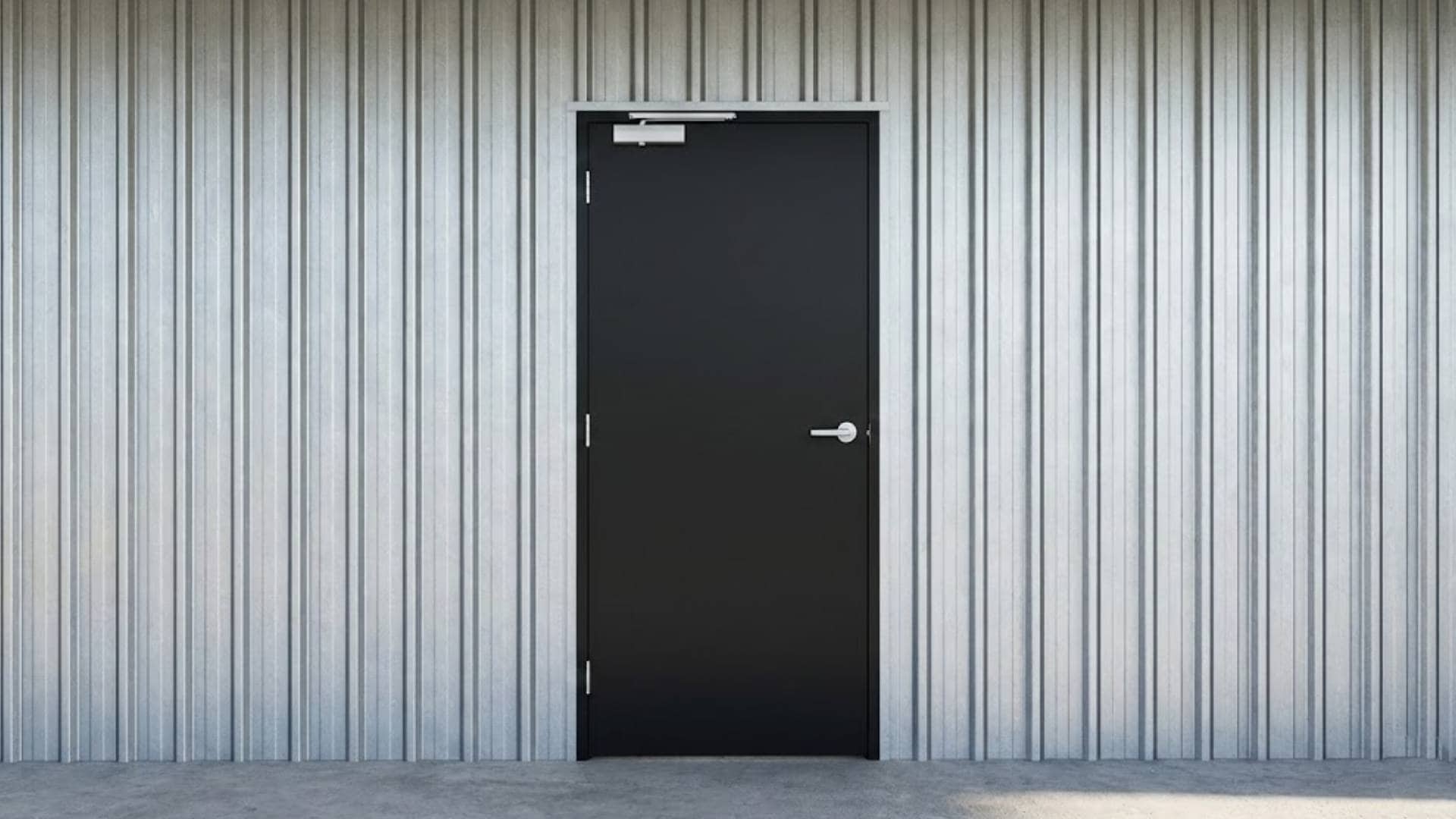

When specifying doors for commercial, industrial, or public buildings, terms like fire-rated door and fire exit door are often used interchangeably. However, they serve different purposes within a building’s broader fire and life safety strategy.
Understanding the distinction helps ensure the right solution is selected for the right application — based on configuration, hardware, and overall building design.
What Is a Fire-Rated Door?
A fire-rated door is designed to help slow the spread of fire and smoke between compartments within a building. Rather than preventing fire entirely, these doors are intended to support passive fire protection by maintaining the integrity of fire-separated areas for a nominated period, depending on their construction and test rating.
Typical capabilities:
Can be configured with specific core materials and facings
Designed to be installed within fire-rated wall systems
Incorporates seals and hardware required to support smoke and fire resistance
Can support building compartmentalisation strategies
It’s important to note that performance depends on the complete door set — including frame, required seals, hardware, glazing (if applicable), and installation method. The rating applies to the tested assembly, not just the leaf itself.
Fire-rated doors are commonly specified in:
Plant rooms
Service corridors
Stairwells
Internal fire-separated zones
Suitability should always be assessed in relation to building class, intended use, and the broader fire engineering approach.
What Is a Fire Exit Door?
A fire exit door, sometimes referred to as an emergency exit door, is primarily concerned with safe egress — allowing occupants to exit quickly during an emergency.
These doors are designed to:
Provide outward opening for evacuation paths
Be fitted with panic or escape hardware
Support safe and efficient occupant movement
Unlike fire-rated doors, fire exit doors are not automatically fire-rated. In some applications, they may also require a nominated fire-resistance level — but that depends on the wall system and building design where they are installed.
Typical applications:
Final exits to the outside
Exit routes from warehouses or industrial facilities
Public buildings requiring clear egress pathways
Again, configuration is key. The performance of an exit door can vary based on hardware selection (such as panic bars or lever sets), door leaf construction, and frame type.
Can a Door Be Both Fire-Rated and a Fire Exit Door?
In some projects, a single door assembly may be configured to support both fire separation and emergency egress. For example:
A door installed in a fire-rated wall along an exit path
A door requiring both nominated fire resistance and panic hardware
A door in a stairwell serving as both compartment protection and an evacuation route
In these cases, the final outcome depends on:
Door leaf construction
Core material
Frame type
Required seals and threshold details
Hardware configuration
Installation method
Because performance relates to the complete assembly, early planning with suppliers, designers, or fire consultants can help ensure the selected option aligns with the intended application.
Choosing the Right Option for Your Project
Rather than thinking in absolutes — such as “fireproof” — it’s more accurate to consider how a door is designed to support a particular outcome within the building system.
When assessing options, consider:
Location within the building – Is it separating fire compartments or providing final egress?
Required rating (if any) – What duration or performance level is nominated by the building design?
Traffic levels – Will it experience frequent daily use?
Hardware requirements – Does it require panic hardware, closers, seals, or access control?
Environmental exposure – Internal, external, coastal, or industrial conditions?
The most suitable door will depend on how these factors come together — not on a single feature alone.
Why Specification Matters
Doors play a supporting role in a broader life safety system that may include alarms, sprinklers, signage, and fire engineering strategies. Selecting an appropriate door assembly involves balancing durability, function, and performance within that system.
Because each building application differs, door sets are often configured to suit project-specific needs. Small variations in hardware, frame preparation, or installation detail can influence suitability.
Related Fire Door and Emergency Exit Resources
Fire-rated doors and fire exit doors are often confused, but they serve different purposes within a building’s fire safety strategy. Understanding how these doors work alongside emergency exits and Australian building regulations can help ensure your facility remains safe and compliant. The following guides provide additional information on fire door types and related compliance requirements:
- Fire Rated Door vs Non Fire Rated Door – Compare fire-rated and non-fire-rated doors to understand the differences in construction, performance and suitable applications.
- What Are Fire Rated Doors? – Learn what fire-rated doors are, how they work and where they are commonly required in commercial and industrial buildings.
- Commercial Fire Door Requirements Australia – Explore commercial fire door requirements, certification considerations and compliance obligations for Australian buildings.
- Emergency Exit Door Requirements Australia – Learn about emergency exit door requirements, egress provisions and compliance obligations for commercial buildings.
- Fire Doors in Escape Routes – Discover how fire doors protect designated escape routes and support safe occupant evacuation during a fire.
- Door Regulations Australia – Understand the key Australian building regulations, standards and compliance requirements that apply to commercial and industrial doors.
Need Help Clarifying the Right Approach?
If you’re unsure whether your project requires a fire-rated door, a fire exit door, or a configuration that supports both functions, it’s worth reviewing the project documentation and discussing the intended application.
Our team can provide guidance on available options, explain how different configurations may support your building design, and help you assess suitability based on the information available.
For project-specific advice, feel free to get in touch — we’re here to help you explore the right solution for your application.
Frequently asked questions
A fire-rated door is designed to resist fire and smoke for a specified period, while a fire exit door is designed to provide safe and quick egress.
Fire-rated doors focus on compartmentalisation, whereas fire exit doors prioritise accessibility and escape. In some applications, a door can be configured to serve both functions when compliant hardware and ratings are specified.
A fire-rated door is required where fire separation or containment is part of the building design.
This typically applies to plant rooms, corridors, and internal divisions where limiting fire spread is critical. Fire exit doors are used for escape routes, but may also need fire-rated properties depending on the building layout and compliance requirements.
Yes, a fire exit door can also be fire-rated if it is designed and specified to meet both functions.
This requires appropriate fire resistance levels, compliant hardware such as panic bars, and correct installation. Combining both functions is common in commercial and industrial buildings where safety and compliance must align.
Key features include certified fire resistance, compliant hardware, and suitability for the building application.
Fire-rated doors are typically configured with seals, core materials, and tested assemblies, while fire exit doors require easy operation and reliable escape functionality. Selecting the right combination depends on both safety and operational needs.
The choice depends on whether the priority is fire containment, safe egress, or both.
Industrial buildings often require a combination of both door types, depending on layout and usage. Doors can be configured to support specific applications, including areas requiring durability, security, and compliance with fire safety standards.