

%402x.svg)

The Hidden Risk in Industrial Facilities
Industrial sites are full of moving parts — machinery, fuel, electrical systems, and heavy materials. While these are the backbone of any operation, they also increase the risk of fire. Many businesses prepare with extinguishers and alarms, but often overlook one of the most effective fire safety measures: fire-rated doors.
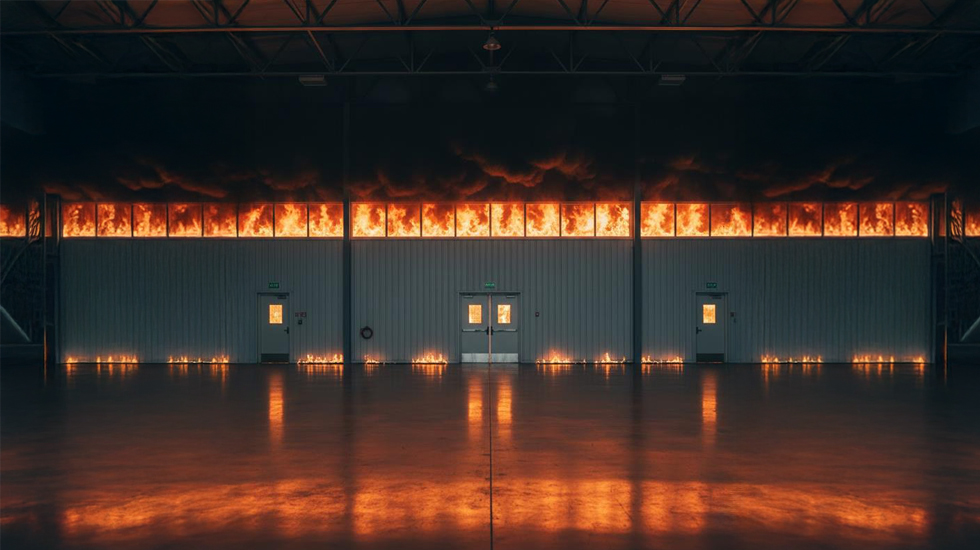
‘Fire doors aren’t just regulatory items. They can be the difference between minor damage and a full-scale disaster. When a fire breaks out, these doors compartmentalise flames, smoke, and heat — designed with the intent to contain the danger for a period of time to allow people to escape.
Beyond Compliance: Real Protection for People and Assets
While it’s true that Australian Standards require certain buildings to install fire-rated doors, the real value goes far beyond compliance. A well-placed fire door helps protect equipment, stored materials, and structural integrity. This containment can save tens of thousands of dollars in damages, minimise downtime, and preserve your ability to operate quickly after an incident.
For industrial and commercial businesses, downtime can be just as costly as damage. Fire-rated doors buy precious time, helping you safeguard both your team and your livelihood.
Built to Perform — Not Just Pass
Larnec’s fire-rated doors are engineered for strength and reliability, combining steel durability with tested fire resistance. Each door is designed for Australian conditions, ensuring long-term protection in demanding environments.
Investing in fire doors isn’t just about ticking a box — it’s about protecting your people, your property, and your productivity.
Contact Us
Protect your site with Larnec’s Australian-made fire-rated doors. Get in touch today to discuss your site’s safety and protection needs.