



%402x.svg)
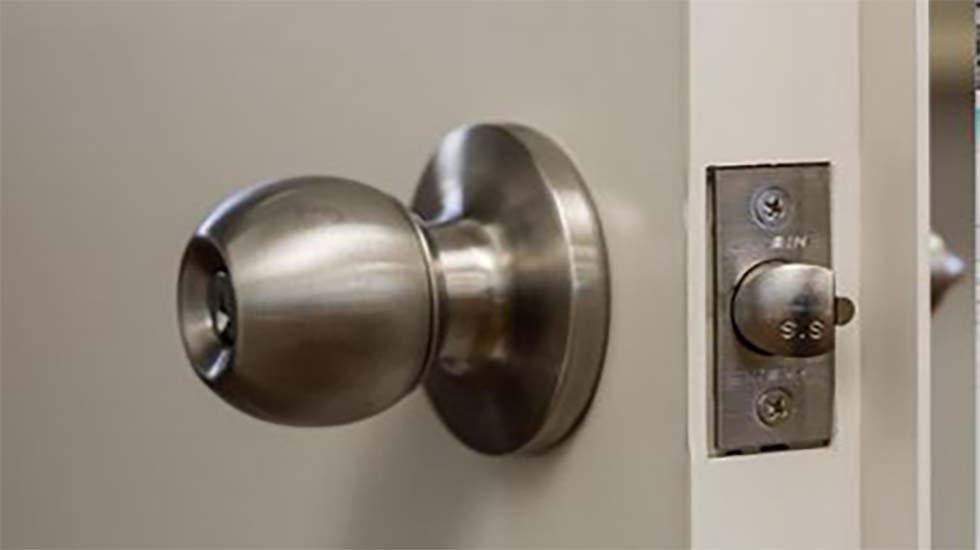

Safety, security, privacy and peace of mind… door locks are an essential component of a door. But it’s not always as straightforward as a simple lock.
With over 300,000 break-ins recorded annually, it is vital to understand the different types of locks and their advantages to help make a decision on what locks you may want to consider for your building or facility.
There are many different types of locks available for industrial steel clad doors, which all work in different ways and have their own benefits. Let’s take a look at three popular options:
Deadbolt
Generally used on external doors, Deadbolts come in three main varieties; single, double and lockable thumbturn. Single locks are most popular in residences and offices and the least secure of the three, as they are unlockable from one side without a key. That being said, these locks provide a simple and safe solution to keeping your door locked and secure.
Double cylinder deadbolts feature a key lock on both sides. Although this is more secure when locked, this can pose problems during fires as the door needs to be unlocked even if the person is inside.
A lockable thumbturn is a hybrid between the two above and are becoming increasingly popular. These locks feature a thumbturn on the inside; however these can be locked using a key. This means the door can be locked from the inside while access is still possible from inside to outside and not outside to inside. This type of lock provides the most security and flexibility. Stay updated on the latest innovations in door security from Master Locksmiths Association of Australasia.

Mortice
Mortice locks tend to be found on older buildings, however, are recently frequently seen on commercial constructions. These locks are used on a wide range of doors including entry, internal and external. Although installation of mortice locks can weaken the general structure of timbre doors, they have solid mechanisms and are more versatile than cylindrical locks.

Panic Bar
Panic bars (also known as crash bars or push bars) are a type of locking and opening mechanism that allows the door to be opened by pushing a bar. Used in many commercial or apartment buildings, these were originally designed to prevent stampedes and are now commonly used on fire doors and are sometimes alarmed. When used on fire doors, these mechanisms usually have to meet health and safety standards.
The bar is installed horizontally, and when pushed, this unlocks the door and allows it to be opened. Due to its design, this makes it simple and swift to use from one side, while still being secure from the outside. This door locking mechanism is also made more versatile by being able to be ‘dogged’, which means retracting with a key to free the door to be used without locking or latching. This is commonly used in commercial buildings during high traffic business hours.

Some other lock types
- Knob locks
- Lever
- Jimmy Proof Deadbolts
- Latch Locks
- Padlocks
- Cam Locks
- Wall Mounted Locks
Explore additional door hardware and accessories to enhance your door security.