

%402x.svg)
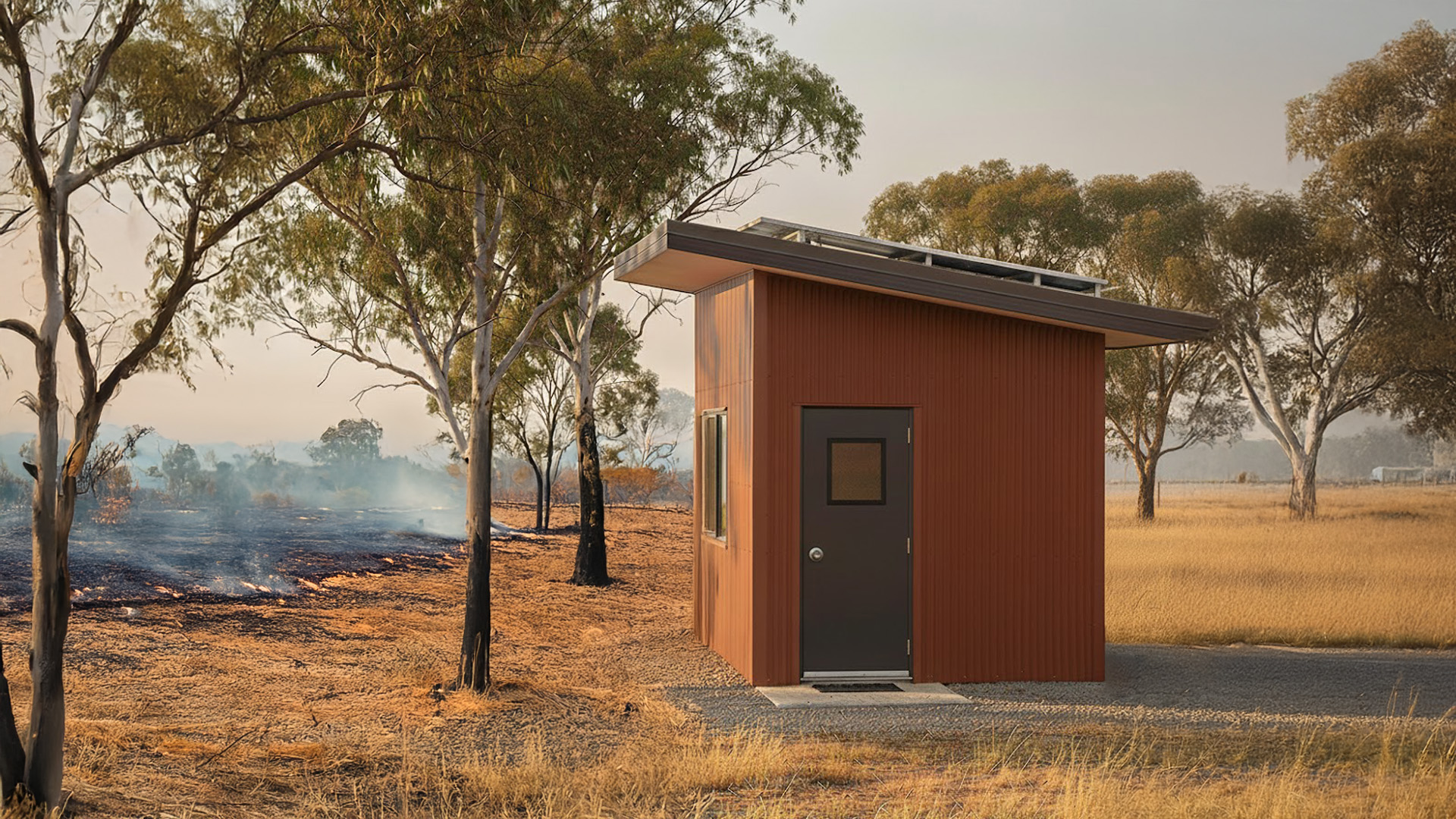

Bushfires are a recurring reality across many parts of Australia, particularly in regional, coastal, and semi-rural areas. While no single building element can eliminate risk, thoughtful material selection and building design can play a meaningful role in supporting overall resilience.
One often overlooked component is the door system—especially in sheds, workshops, portable buildings, industrial structures, and ancillary spaces. Choosing door options that are suited to harsh external conditions can help reduce vulnerabilities when bushfire risk is elevated.
This article explores how door materials, construction methods, and configuration choices may support buildings located in bushfire-prone environments, with reference to Bushfire Attack Levels (BAL) and relevant Australian Standards.
Understanding the Role of Doors in Bushfire-Exposed Locations
During a bushfire event, buildings may be exposed to:
• Radiant heat
• Wind-borne embers
• Smoke infiltration
• Debris impact under high wind conditions
Doors are typically one of the largest openings in a structure, which makes their construction quality, fit, and material choice an important consideration in overall building performance.
Rather than relying on a one-size-fits-all solution, door selection in these environments is best approached as a set of options that can be configured based on the application and the required BAL rating for the site.
What Is a BAL Rating and Why Does It Matter?
A Bushfire Attack Level (BAL) rating measures the potential exposure of a building to bushfire hazards such as ember attack, radiant heat, and direct flame contact. BAL ratings are defined under Australian Standard AS 3959-2018 and are used to determine minimum construction requirements in bushfire-prone areas.
BAL ratings range from BAL-LOW through to BAL-FZ (Flame Zone) and are influenced by factors including vegetation type, distance to bushland, slope, and local conditions.
If your property is located in a designated bushfire-prone area, a BAL assessment is typically required. This is usually carried out by a qualified bushfire assessor, though preliminary estimates can be explored using tools such as the VicPlan mapping system (VIC), the NSW Rural Fire Service online tool, the CSIRO BAL Assessment Tool, or the WoodSolutions Bushfire Calculator.
Your BAL rating directly impacts the specification of building elements—including personal access doors, glazing, seals, and hardware—which must comply with AS 3959-2018.
Material Choices That May Support Durability
Metal Door Construction
Metal-clad door systems are commonly selected for industrial and rural settings due to their durability and low maintenance requirements.
Depending on design and configuration, metal doors:
• Can offer greater resistance to warping compared to some timber alternatives
• Are manufactured from non-combustible materials, which aligns with AS 3959-2018 requirements for BAL-rated construction
• Must be specified and installed as part of a BAL-compliant door assembly to be suitable for bushfire-prone areas
• May reduce gaps forming over time when correctly installed
This makes them a practical option for sheds, garages, and industrial buildings when selected to meet the site’s specific BAL rating rather than as a standalone solution.
Door Fit, Sealing, and Installation Quality
Beyond the door leaf itself, how a door fits within its frame can influence its performance in demanding conditions.
Key considerations include:
• Consistent door-to-frame tolerances
• Properly installed jambs and thresholds
• Compatibility with appropriate sealing systems
Well-fitted door assemblies can help limit airflow and ember entry only when the complete door system—including seals, frames, glazing, and hardware—is designed and installed to comply with the applicable BAL requirements under AS 3959-2018. This is particularly relevant for portable and modular buildings, where consistent installation plays a critical role.
BAL Considerations for Personal Access Doors
Once a BAL rating is established, personal access doors (and any associated glazing) must comply with AS 3959-2018.
For BAL-12.5 to BAL-29, requirements generally include:
• Construction from non-combustible materials (such as metal), or solid timber with a minimum thickness of 35mm
• Tight-fitting door leaves and frames
• Draught and ember seals fitted to all edges
• Glazing that meets BAL requirements where applicable
Larnec can achieve compliance up to BAL-29 with selected Sentry personal access doors when configured with the appropriate seals, hardware, and installation methods.
Speak With Our Team About Your Requirements
Every project is different, particularly in areas affected by bushfire risk. Discussing your specific requirements with our team can help you determine which materials, configurations, and hardware options may be appropriate for your building. If you’d like guidance based on your structure type or usage, you can contact the Larnec team to discuss suitable door options.