



%402x.svg)
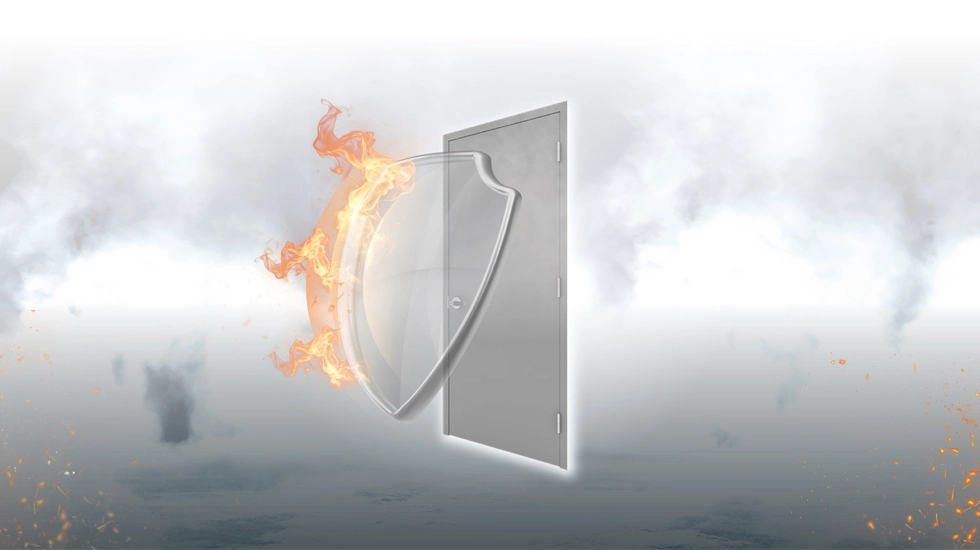

What Is a Fire Rated Door?
A fire rated door (or fire door) is a specially engineered door that helps prevent the spread of flames and smoke during a fire. Unlike standard doors, fire doors are made of fire-resistant materials and come with specialised hardware that helps contain fire for a set period — usually 30, 60, or 120 minutes.

What Makes a Door “Fire Rated”?
Fire doors are tested under Australian Standard AS1905.1, which determines how long they can withstand high heat and pressure. The most common features include:
- Solid-core construction (steel or fire-rated composite)
- Intumescent seals that expand with heat to block smoke
- Fire-resistant glass (if vision panels are included)
- Compliant self-closing mechanisms
- Certified fire door hinges and latches
Fire Door Requirements in Australia
In Australia, fire rated doors are often legally required under the National Construction Code (NCC) and relevant state building regulations. They are commonly found in:
- Commercial buildings (e.g. office towers, shopping centres)
- Industrial facilities (e.g. warehouses, factories)
- Public buildings (e.g. hospitals, schools, airports)
- Remote and high-risk sites (e.g. mining camps, transport depots)
If your building has fire zones, emergency exits, or fire stairwells, chances are you need certified fire doors installed.
Non-compliant doors can lead to failed inspections, insurance issues, and serious safety risks.
Why You Should Install Fire Doors (Even If Not Legally Required)
Even if you’re not required by law, fire rated doors offer huge benefits:
- Protection of property & assets
- Safe evacuation during emergencies
- Reduced fire insurance premiums
- Compliance with future audits or refurbishments
Types of Fire Rated Doors Available
Larnec supplies a range of compliant and durable fire door solutions for industrial and commercial use:
- Fully sealed fire-rated doors
- Doors with vision panels and smoke seals
- High-durability steel skin fire doors
- Portable building fire doors (for dongas and site offices)
Explore our fire rated doors here.
Fire Door Compliance Checklist
Use this simple checklist to determine if your facility needs a fire door:
- Does your building have more than one tenancy?
- Is there an internal stairwell, lift, or fire-isolated corridor?
- Is it part of a Class 2–9 building(according to NCC)?
- Do you have server rooms, storage areas, or high-risk operations?
If you said yes to any of these, you’re likely required to install fire rated doors.