



%402x.svg)
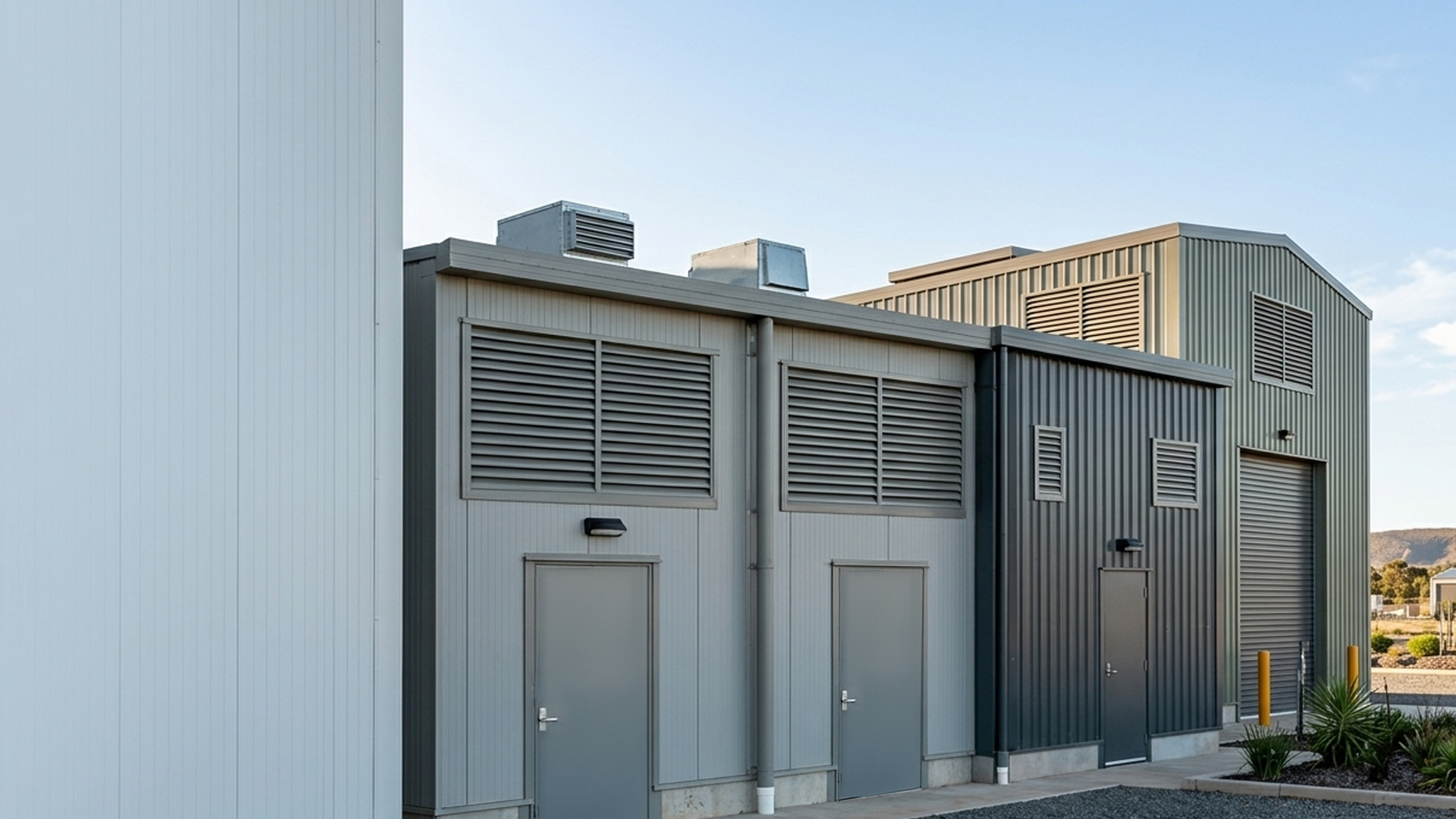
Ventilation is becoming an increasingly important consideration across industrial, commercial, modular, and public infrastructure projects.
As building design continues to evolve, greater attention is being given to indoor air quality, occupant comfort, equipment protection, airflow management, and overall building performance. Whether it’s a modular building, plant room, public amenities facility, utility structure, pump station, switchroom, or industrial shed, ventilation is now being considered earlier in the design and specification process than ever before.
While mechanical systems remain an important part of many buildings, passive ventilation solutions such as wall vents, louvre vents, ventilation hatches, and louvred access doors are playing an increasingly important role in supporting airflow objectives.
For project teams planning new facilities or upgrading existing assets, understanding how ventilation requirements interact with access, durability, and building performance can help inform better design decisions from the outset.
Why Ventilation is Receiving More Attention
Historically, ventilation was often viewed primarily as a mechanical services consideration. Today, it is increasingly recognised as part of the broader building envelope strategy.
Several factors are contributing to this shift, including:
- Increased focus on indoor air quality
- Greater awareness of occupant wellbeing
- Building performance objectives
- Energy efficiency considerations
- Growth in modular and prefabricated construction
- Protection of sensitive equipment and infrastructure assets
- Increased attention to moisture management and condensation control
As a result, architects, builders, engineers and facility managers are placing greater emphasis on how airflow moves throughout a building and how ventilation solutions can be integrated into the overall design.
Common Ventilation Challenges Across Modern Buildings
While every project is different, several ventilation challenges regularly arise across industrial, modular and infrastructure environments.
Heat Build-Up
Buildings containing electrical equipment, switchboards, pumps, generators, batteries or processing equipment often require ventilation pathways to help manage internal temperatures.
Condensation and Moisture
Poor airflow can contribute to moisture accumulation, condensation and long-term deterioration of building components, particularly in coastal, tropical and high-humidity environments.
Occupant Comfort
In occupied buildings such as site offices, workforce accommodation, amenities blocks and modular classrooms, airflow plays an important role in supporting comfortable internal environments.
Asset Protection
Ventilation solutions can assist in managing environmental conditions around critical infrastructure equipment, helping support long-term asset performance.
Ventilation Considerations During the Design Phase
One of the most common challenges project teams face is considering ventilation too late in the design process.
Across industrial and infrastructure projects, ventilation requirements can influence:
- Building layouts
- Wall penetrations
- Access requirements
- Equipment locations
- Building envelope design
- Maintenance accessibility
Early planning allows ventilation solutions to be integrated more effectively alongside doors, hatches, access panels and other building components.
In many cases, this can help avoid costly redesigns or modifications later in the project lifecycle.
Choosing the Right Ventilation Solution
There is no one-size-fits-all approach to building ventilation.
The most appropriate solution depends on factors such as airflow requirements, environmental conditions, occupancy levels, maintenance requirements and building configuration.
Wall Vents
Wall vents are commonly used across industrial, modular and infrastructure projects to facilitate airflow through external walls and building envelopes.
Typical applications include:
- Utility buildings
- Storage facilities
- Site offices
- Modular buildings
- Public amenities
- Service structures
Wall vents are often selected where a simple, durable airflow pathway is required.
Louvre Vents
Louvre vents are widely used where both airflow and weather protection are important considerations.
Common applications include:
- Pump stations
- Switchrooms
- Equipment enclosures
- Plant rooms
- Infrastructure buildings
- Transportable buildings
When selecting louvre vents, project teams often consider factors such as:
- Required airflow
- Free area performance
- Weather exposure
- Corrosion resistance
- Insect screening requirements
- Maintenance accessibility
The most suitable louvre design will depend on the specific operating environment and project objectives.
Ventilation Hatches
Ventilation hatches may be specified where both ventilation and controlled access are required.
These solutions are commonly incorporated into:
- Service buildings
- Utility infrastructure
- Equipment compounds
- Plant rooms
- Public infrastructure projects
Ventilation hatches can provide practical access while supporting airflow requirements within the broader ventilation strategy.
Integrating Ventilation and Access Requirements
Ventilation and access are often considered separately, despite being closely linked in many building designs.
Many industrial and infrastructure facilities require both secure access and effective airflow management.
In these situations, project teams may consider:
- Louvred doors
- Ventilation grilles
- Door-mounted airflow solutions
- Ventilated access panels
- Plant room access doors
By integrating ventilation into access systems, project teams can help simplify building layouts while maintaining both operational and maintenance requirements.
This is particularly common in plant rooms, switchrooms, pump stations, modular buildings and utility facilities.
Ventilation Across Key Industries
Modular Buildings
Modular and transportable buildings often require carefully planned airflow strategies due to their construction methods and occupancy requirements.
Applications commonly include:
- Site offices
- Mining accommodation
- Portable buildings
- Workforce accommodation
- Temporary facilities
Industrial Facilities
Warehouses, workshops, manufacturing facilities and processing environments often require ventilation solutions tailored to operational needs.
Ventilation systems may incorporate wall vents, louvre vents, ventilation hatches and mechanical systems as part of a coordinated airflow strategy.
Public Amenities and Community Infrastructure
Public amenities buildings, community facilities and service structures often require durable ventilation solutions designed to perform in varying environmental conditions.
Utilities and Infrastructure
Infrastructure assets such as pump stations, switchrooms, communications facilities and equipment enclosures frequently require carefully designed airflow pathways to support equipment performance and maintenance access.
Balancing Ventilation with Building Performance
One of the most significant trends influencing modern building design is the need to balance ventilation objectives with broader building performance requirements.
Project teams are increasingly evaluating how ventilation solutions interact with:
- Building envelopes
- Occupancy requirements
- Environmental conditions
- Energy efficiency goals
- Maintenance requirements
- Security considerations
- Asset protection objectives
Rather than relying on a single solution, many projects utilise a combination of ventilation approaches tailored to the specific needs of the building.
How Larnec Supports Ventilation-Focused Projects
Larnec supplies ventilation solutions for industrial, commercial, modular, shed and infrastructure applications throughout Australia.
Drawing on decades of experience supplying access systems, doors, hatches and ventilation products, Larnec works with builders, contractors, architects and project teams to help identify practical ventilation solutions suited to the needs of each project.
Depending on project requirements, solutions may include:
- Wall vents
- Louvre vents
- Ventilation hatches
- Louvred doors
- Door-mounted ventilation options
- Custom ventilation configurations
Because ventilation performance depends on factors such as building design, environmental conditions, installation methods and overall system configuration, product suitability should always be assessed against the specific requirements of the project.
Whether you’re designing a modular building, public amenities block, switchroom, pump station, utility structure or industrial facility, Larnec can help identify ventilation and access solutions that support your project objectives.
Frequently asked questions
Why is ventilation becoming more important in building design?
Ventilation helps support indoor air quality, occupant comfort, equipment protection, moisture control, and overall building performance across modern industrial, commercial, and modular buildings.
What happens if ventilation is considered too late in a project?
Late ventilation planning can lead to design changes, additional costs, compromised airflow pathways, and reduced flexibility when integrating access systems and building services.
What ventilation solutions are commonly used in industrial buildings?
Common solutions include wall vents, louvre vents, ventilation hatches, louvred doors, and door-mounted ventilation systems designed to support airflow requirements.
How does ventilation help protect equipment?
Proper airflow can help manage heat build-up, reduce moisture accumulation, and support the long-term performance of electrical equipment, switchboards, pumps, and plant infrastructure.
What industries commonly require ventilation solutions?
Ventilation solutions are widely used in modular buildings, industrial facilities, public amenities, utility structures, switchrooms, pump stations, and infrastructure projects.