



%402x.svg)
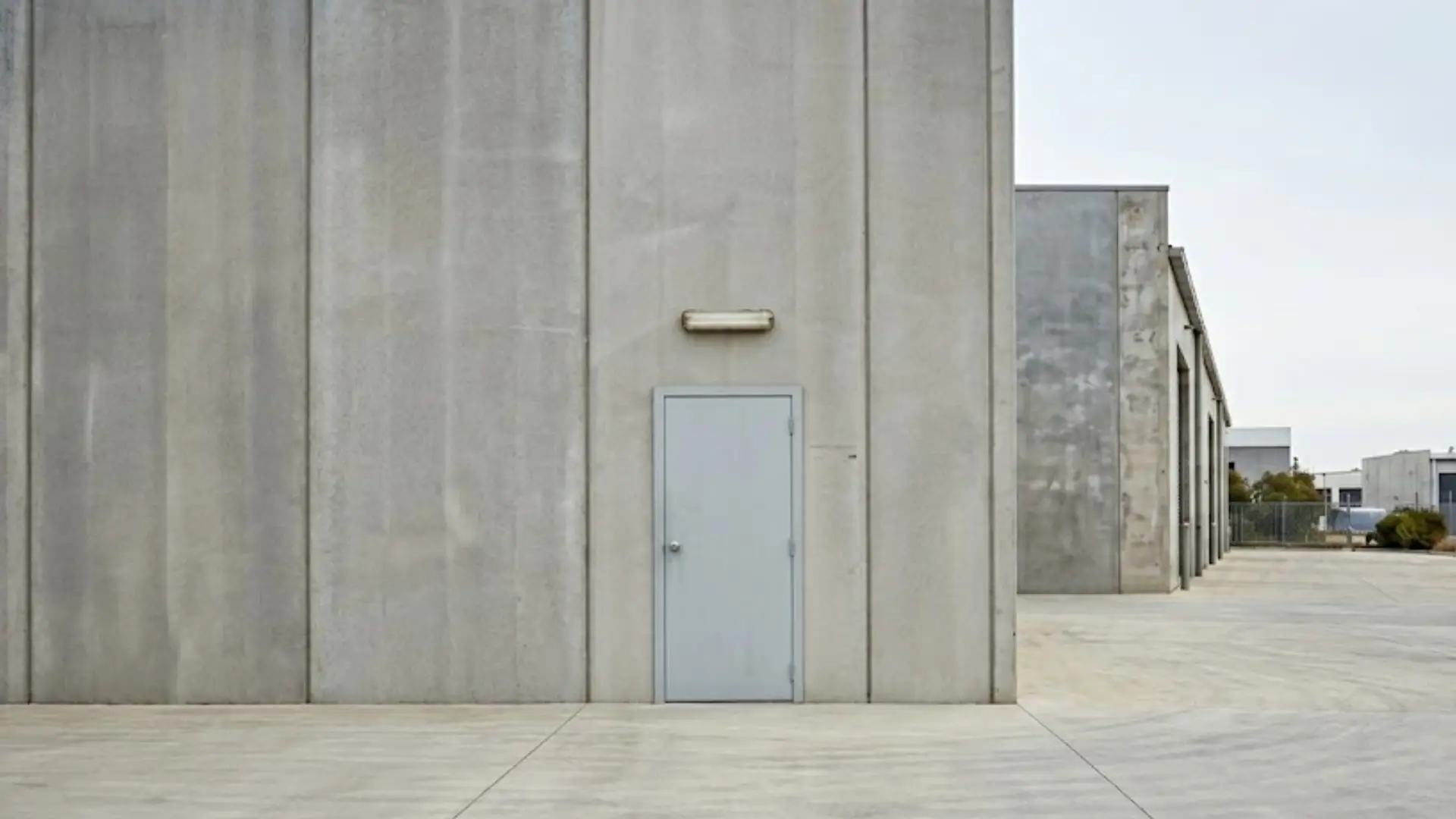

Concrete tilt-panel construction is widely used across Australian industrial and commercial buildings due to its strength, speed of installation and structural efficiency.
When specifying doors for these buildings, compatibility with the wall system is just as important as the door itself.
Larnec’s Sentry range of tilt-panel personal access doors are designed to support integration into concrete tilt-panel wall systems, with configuration options suited to the structural and installation requirements of this construction method.
Understanding Concrete Tilt-Panel Wall Systems
Tilt-panel walls are formed by casting concrete panels horizontally on-site and then lifting (“tilting”) them into position to create the building envelope.
These systems are commonly used in:
- Warehouses
- Factories
- Distribution centres
- Storage facilities
- Agricultural and industrial sheds
Because tilt panels are solid concrete, door openings must be accurately formed and allow for appropriate fixing methods, tolerances and hardware clearances.
Door selection should therefore consider:
- Wall thickness
- Structural load transfer
- Fixing method
- Clearance requirements
- Internal and external finishes
Sentry Doors for Concrete Tilt-Panel Applications
Larnec’s Sentry door range provides fit-for-purpose solutions for concrete tilt-panel and precast wall systems.
Rather than being a single “tilt-panel door”, Sentry models can be configured to suit the structural and compliance requirements of each project.
Depending on the building specifications, Sentry doors can be adapted for:
- Concrete wall openings
- Four-sided jamb installations
- Reversible handing requirements
- Inward or outward opening preferences
- Door closer preparation where required
- Fire-rated configurations (where specified)
Door selection will depend on site location, NCC requirements, fire separation needs, and intended building use.
By supplying pre-hung door systems designed for formed concrete openings, Larnec helps support installation accuracy and on-site efficiency in tilt-panel construction environments.
Designed to Support Industrial Environments
Tilt-panel buildings are typically used in environments that require durability and practical access control.
The Sentry door system includes features such as:
- Dual-skin construction
- Zinc-plated, powder-coated hinges
- Pre-prepped hardware options
- 180° opening capability
- Quality commercial-grade hardware
Suitability will depend on:
- Traffic volume
- Hardware specification
- Installation method
- Environmental exposure
- Project-specific requirements
Why Fit-for-Purpose Matters
In tilt-panel construction, door performance is influenced not just by the door leaf, but by:
- The wall structure
- Installation method
- Hardware selection
- Environmental conditions
A door that is configured for the wall system helps reduce installation complications and supports long-term performance in industrial environments.
Rather than applying a generic solution, selecting a fit-for-purpose configuration allows the door system to align with the structural intent of the building.
Discussing Your Tilt-Panel Project
Every concrete tilt-panel project has its own structural details and performance expectations.
If you’re specifying doors for a warehouse, factory or industrial facility, Larnec’s team can help you review:
- Wall thickness and opening details
- Hardware requirements
- Insulation priorities
- Installation preferences
Call 1800 527 632 to discuss how the Sentry tilt-panel range can be configured to support your concrete tilt-panel wall system.
Choosing the right door isn’t about over-specifying — it’s about selecting a solution that aligns with how your building is designed and used.
Frequently asked questions
A fit-for-purpose door is designed to align with the structural, environmental, and usage requirements of concrete tilt-panel construction.
This includes compatibility with wall thickness, fixing methods, and site conditions. Doors that can be configured for wind rating, durability, and installation method are typically more suitable for these applications.
Doors are typically installed using cast-in fixings, masonry anchors, or pre-formed openings depending on the build method.
Pre-hung door systems can simplify installation by reducing on-site modifications. Proper alignment with the panel opening and structural support is essential to ensure long-term performance.
Standard doors may not always be suitable for tilt-panel systems without modification.
Tilt-panel construction often requires doors designed to support structural movement, sealing, and fixing requirements. Fit-for-purpose door systems are typically more reliable in industrial and commercial applications.
Yes, doors can be configured to support wind-rated and environmental performance requirements.
This may include reinforced construction, sealing systems, and appropriate hardware selection. These configurations are particularly important for exposed industrial sites and large-scale buildings.
Industrial buildings commonly use durable steel door systems designed for frequent use and site conditions.
Applications may include warehouse access, plant rooms, and service entries, where configurations similar to security doors or fire-rated doors can be suitable depending on compliance and operational needs.