



%402x.svg)
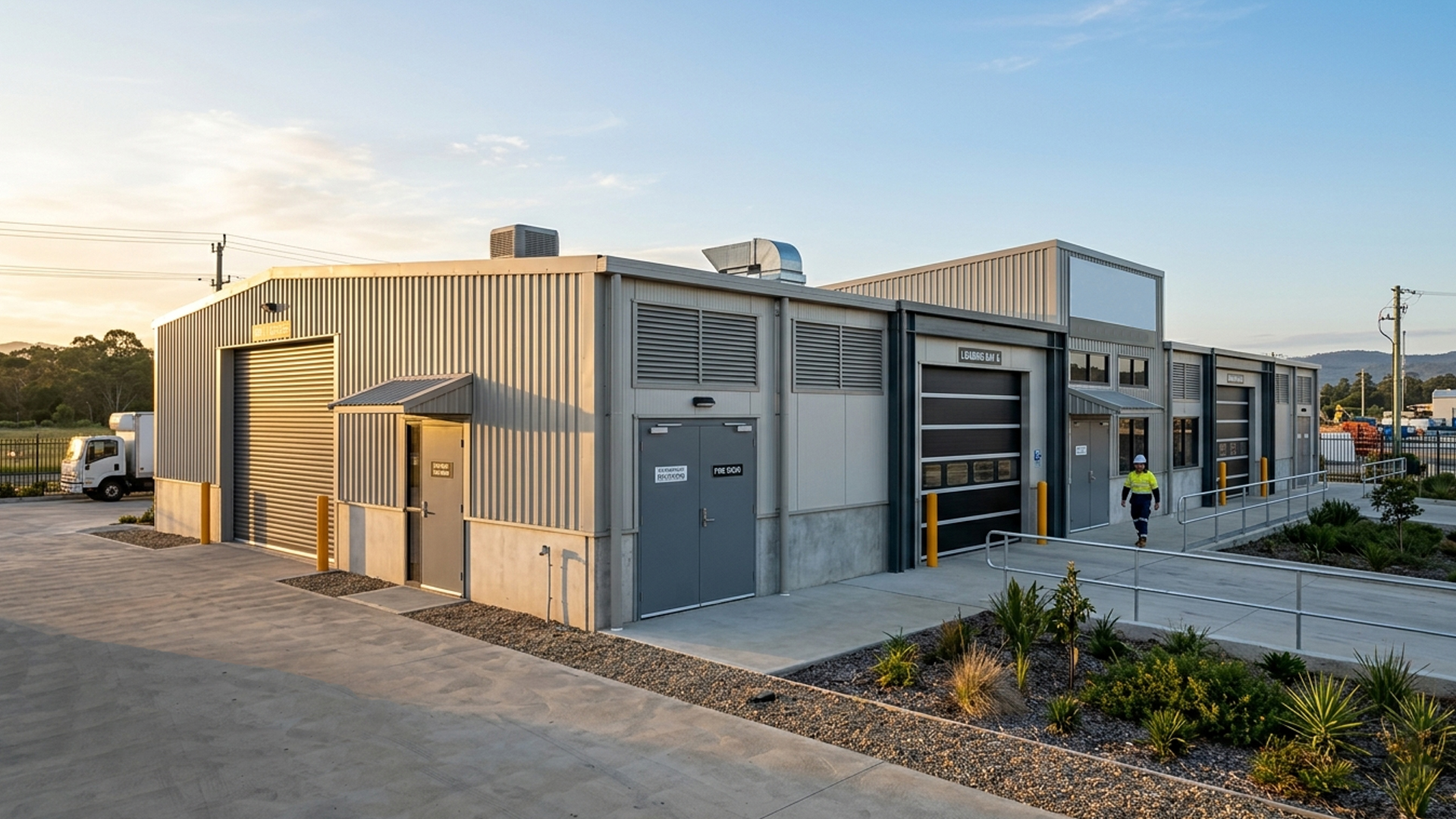

Modular buildings are used across a wide range of industries, from construction site offices and accommodation units to mining facilities, education spaces, healthcare buildings, transportable offices and remote workforce camps. While the structure itself often receives significant attention during planning, door selection can have a major influence on usability, durability, access control, occupant movement and long-term maintenance requirements.
This modular building door selection guide explores the key factors to consider when choosing doors for modular and portable buildings, helping project managers, builders, procurement teams and facility operators identify options that may be suitable for their specific application.
Why Door Selection Matters in Modular Buildings
Unlike conventional construction, modular buildings are frequently manufactured off-site, transported over long distances and installed in varying environmental conditions. This creates unique design considerations that can influence door performance requirements.
Door systems may need to support:
- Frequent occupant movement
- Transportation and relocation requirements
- Exposure to coastal, remote or industrial environments
- Site-specific wind conditions
- Access control requirements
- Durability expectations
- Emergency egress considerations
- Maintenance and lifecycle objectives
The most suitable solution often depends on the building’s intended use, location, hardware selection and overall project specifications.
Understanding Different Modular Building Applications
Door requirements can vary significantly depending on the type of modular building.
Site Offices
Temporary and permanent site offices often prioritise durability, ease of installation and reliable day-to-day operation. Door systems can be configured with a range of hardware options depending on occupancy levels and access requirements.
Accommodation Buildings
Accommodation units may require consideration of occupant comfort, privacy, access management and environmental conditions. Door configurations may vary depending on room layouts and building design.
Mining and Resource Facilities
Remote facilities often operate in demanding environments where durability, weather resistance and maintenance considerations may influence product selection.
Education and Training Buildings
Schools and training facilities frequently require solutions that support high traffic volumes while allowing for practical access management and occupant movement.
Healthcare and Community Buildings
Healthcare and community structures may require specialised hardware configurations depending on operational requirements and building design objectives.
Key Factors When Selecting a Modular Building Door
1. Building Location
Environmental conditions can influence the type of door system that may be suitable.
Factors to consider include:
- Coastal exposure
- Remote locations
- Industrial environments
- Regional weather conditions
- Wind loading requirements
- Corrosion considerations
Different door constructions and finishes can be selected depending on the anticipated environmental conditions.
2. Door Construction
Door construction can influence durability, maintenance requirements and thermal performance.
Common options include:
Fully Steel-Clad Doors
Steel-clad doors are commonly specified for modular buildings due to their durability and suitability for demanding environments. These systems are often selected for site offices, accommodation units and industrial facilities.
Insulated Door Options
Insulated cores can be configured to support thermal performance objectives depending on project requirements.
Common core options may include:
- Expanded Polystyrene (EPS)
- Polyisocyanurate (PIR)
The most appropriate option typically depends on building use, climate conditions and project specifications.
3. Traffic Levels
Expected usage patterns can influence door and hardware selection.
Questions to consider include:
- How many occupants will use the door daily?
- Will equipment regularly pass through the opening?
- Is the building open to the public?
- Are multiple access points required?
Higher traffic applications may benefit from different hardware configurations than lower traffic environments.
4. Access Control Requirements
Modern modular facilities often incorporate varying levels of access management.
Depending on operational requirements, doors can be configured with:
- Lever sets
- Knob sets
- Restricted key systems
- Digital access systems
- Door closers
- Panic hardware
- Escape function hardware
Hardware selection should be assessed alongside building usage requirements and project objectives.
5. Opening Direction and Building Layout
Door handing and opening direction can influence usability and space efficiency.
Considerations may include:
- Internal circulation paths
- Emergency egress pathways
- Building occupancy
- Furniture layouts
- Site constraints
Early planning can help reduce modifications during installation.
Wind-Rated Doors for Modular Buildings
Many modular structures are installed in regions where wind loading requirements must be considered during project planning.
Wind-rated door systems are designed to support specified performance requirements when configured and installed according to relevant project documentation.
Selection should consider:
- Project location
- Wind region classification
- Installation methodology
- Frame configuration
Final suitability should always be assessed against project-specific engineering and design requirements.
Thermal Performance Considerations
As energy efficiency becomes increasingly important, thermal performance is often part of the door selection process.
Insulated door systems can contribute to broader building performance objectives by supporting temperature management within modular structures.
Potential considerations include:
- Climate conditions
- Building occupancy patterns
- HVAC requirements
- Building envelope design
- Insulation specifications
Performance outcomes will depend on the complete building system rather than the door alone.
Common Mistakes When Selecting Modular Building Doors
Choosing Based Solely on Price
Initial purchase cost is only one factor in overall lifecycle value. Installation, maintenance, durability and replacement considerations can all influence long-term project outcomes.
Overlooking Hardware Requirements
Hardware often plays a significant role in how a door system performs within its intended application.
Ignoring Future Building Relocation
Many modular structures are relocated during their service life. Selecting products designed to support transportable applications may help reduce future complications.
Not Considering Environmental Conditions
Environmental exposure can influence material selection, finish requirements and maintenance expectations.
Questions to Ask Before Specifying a Modular Building Door
Before making a final selection, project stakeholders may wish to consider:
- What is the intended use of the building?
- What environmental conditions will the building experience?
- Is wind performance a consideration?
- What level of occupant traffic is expected?
- Are specialised hardware configurations required?
- Will the building be relocated in the future?
- Are thermal performance objectives part of the project?
- What maintenance expectations exist over the building lifecycle?
These questions can help narrow suitable options and support more informed decision-making.
Selecting the Right Door for Your Modular Building Project
There is no single modular building door solution that suits every application. The most appropriate choice will depend on building design, environmental conditions, hardware requirements, occupancy levels and operational objectives.
For many modular projects, fully metal-clad pre-hung door systems can provide a practical starting point due to their durability, installation efficiency and ability to be configured for different applications. Additional options such as insulated cores, specialised hardware and wind-rated configurations may also be considered depending on project requirements.
Early consultation during project planning can often help identify suitable door configurations and avoid costly changes later in the construction process.
Need Assistance Selecting a Modular Building Door?
Whether you’re planning a site office, accommodation village, education facility, transportable building or industrial modular project, selecting the right door configuration starts with understanding the building’s intended use and operating environment.
Larnec works with builders, modular manufacturers, project managers and facility operators across Australia to help identify door solutions that can be configured to support a wide range of modular building applications.
If you’re evaluating options for an upcoming project, contact the Larnec team to discuss your requirements and explore suitable door configurations for your specific application.
Frequently asked questions
Fully metal-clad doors are commonly used in modular buildings due to their durability, ease of installation and suitability for a range of applications. The most suitable option will depend on the building’s intended use, environmental conditions and hardware requirements.
Some modular building projects use door systems specifically selected to support transportable construction methods. Factors such as transportation, installation requirements, wind conditions and building design may influence product selection.
Yes. Some modular building door systems can be configured with insulated core options such as Expanded Polystyrene (EPS) or Polyisocyanurate (PIR). The most appropriate insulation option will depend on project objectives and building specifications.
Key considerations may include building use, environmental conditions, occupant traffic, hardware requirements, thermal performance objectives and any project-specific wind loading requirements.
Some door systems can be configured for projects where wind performance is a consideration. Suitability will depend on the door configuration, frame, hardware selection, installation methodology and project engineering requirements.
Depending on project requirements, doors can be configured with lever sets, knob sets, door closers, escape function hardware, restricted key systems and electronic access solutions.
Hardware selection can significantly influence usability, occupant movement, access management and long-term maintenance requirements. Door and hardware selections are often assessed together during the specification process.
Many modular building door systems can be configured with different sizes, hardware options, core types, finishes and opening directions depending on project requirements and product capabilities.
Modular building doors are commonly used across construction, mining, education, healthcare, government, accommodation, transportable offices, workforce camps and industrial facilities.
The most suitable solution will depend on the building’s intended application, environmental conditions, occupancy levels, hardware requirements and project specifications. Early planning can help identify door configurations that align with project objectives.