



%402x.svg)

Containment Saves Everything Around It
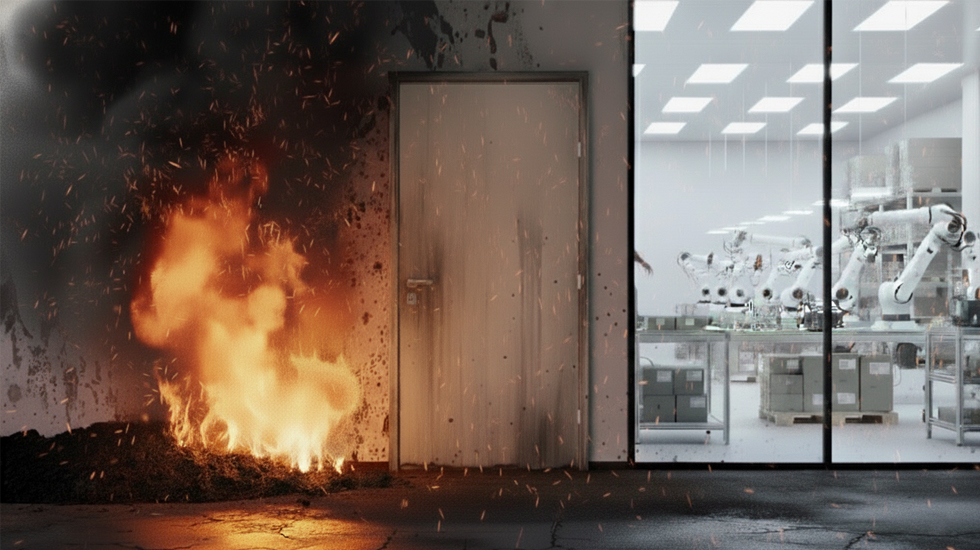
Fire doors play a vital role in containing both flames and smoke. When placed strategically between sections of a building — such as between production zones, offices, and storage areas — they isolate the threat. This containment is designed to prevent smoke and heat from spreading into areas where expensive machinery or materials are stored.
In many industrial fires, it’s not the flames that cause the biggest losses — it’s the smoke and heat damage. Fire-rated doors form a barrier that protects assets from those secondary effects, supporting the kind of compartmentalisation highlighted in NIST’s compartment fire dynamics research.
Fire Safety: Protecting People First — and the Operations They Rely On
Protecting lives is always the highest priority in any fire situation. But once people are safe, the next critical focus for any business is safeguarding the equipment, infrastructure, and work areas that keep operations running.
Even a small fire can create large-scale disruption, not only from flames but from smoke, heat, and contamination spreading into unaffected areas.
Reducing Business Interruption
Downtime after a fire is one of the biggest costs businesses face. Rebuilding operations, replacing machinery, and restoring utilities can take weeks or months. A well-installed fire door system can limit the damage to one part of a facility, allowing other areas to continue operating safely.
That’s how fire doors don’t just save property — they save productivity.
Larnec’s Approach: Built for the Real World
At Larnec, our fire-rated doors are designed with both protection and practicality in mind. We know businesses need doors that are easy to install, robust enough for industrial use, and engineered to last.
When you choose a Larnec fire door, you’re not just protecting your building — you’re protecting everything that keeps your business running.
Contact Us
Safeguard your equipment and productivity. Contact Larnec for high-performance fire-rated door solutions.
Frequently asked questions
Fire doors protect business assets by containing fire and smoke to specific areas, reducing overall damage.
By limiting fire spread, they help safeguard equipment, inventory, and infrastructure. This containment can support faster recovery and reduce operational disruption.
Assets most at risk include machinery, stock, critical infrastructure, and operational systems.
Without proper fire separation, fire and smoke can spread quickly across large areas. Fire doors designed for these environments help isolate high-risk zones and reduce exposure.
Yes, fire doors can help reduce financial losses by minimising the extent of fire damage.
By protecting key areas and limiting spread, they reduce repair costs, inventory loss, and downtime. This makes them an important part of risk management in industrial and commercial settings.
Fire doors should be installed in areas that separate high-value or high-risk zones.
Common locations include plant rooms, storage areas, and access points between operational spaces. Strategic placement helps protect critical assets and supports safer building design.
Effective fire doors include certified fire resistance, reliable sealing, and durable construction suited to the application.
Features such as self-closing mechanisms and robust core materials help maintain performance during a fire event. Proper configuration ensures the door supports both safety and asset protection.