



%402x.svg)
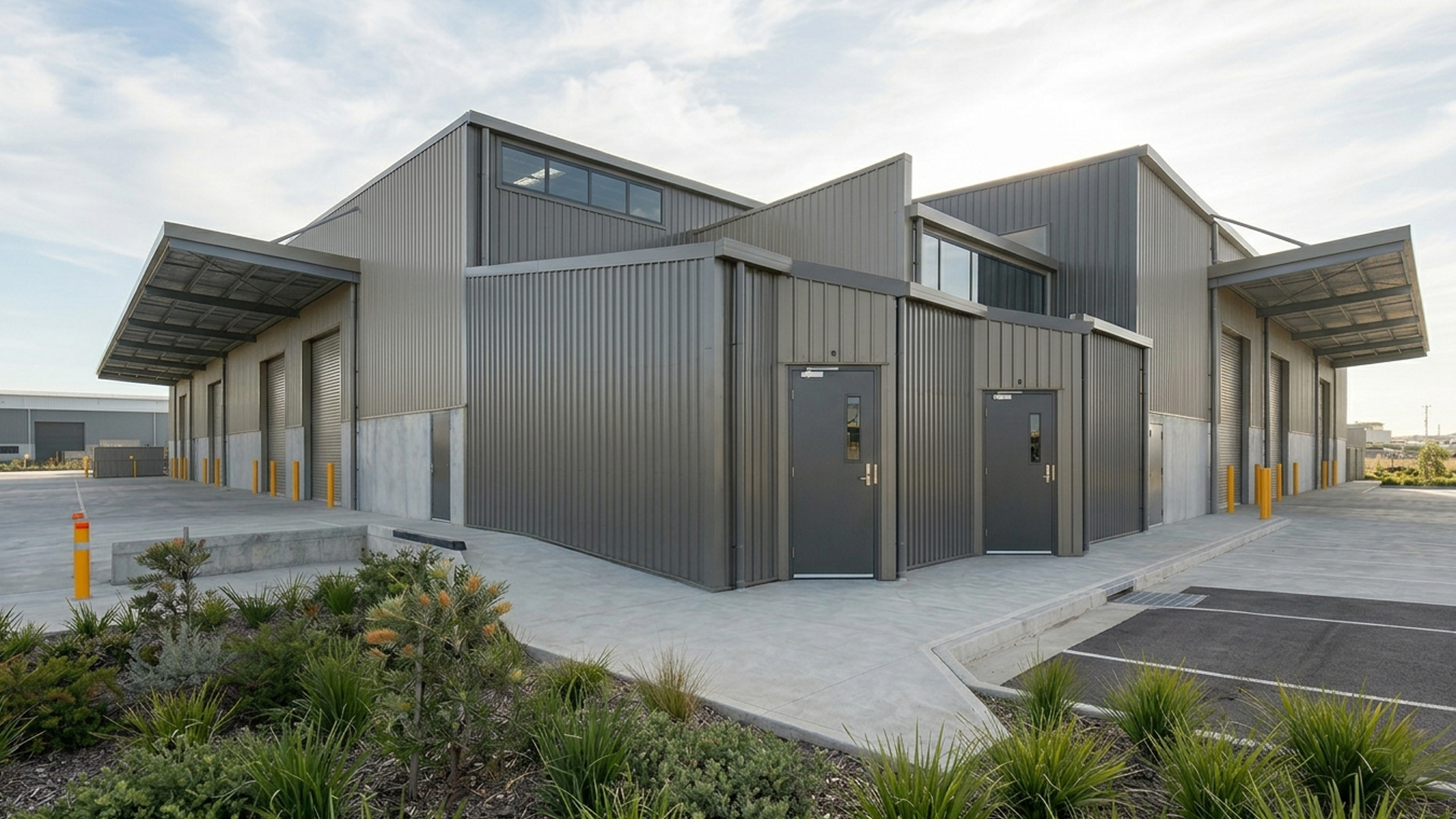

When specifying a commercial or industrial door, performance is rarely determined by the door leaf alone. Door suitability is often influenced by the surrounding structure, hardware configuration, environmental exposure, operational requirements, and how the opening will be used over time.
From warehouses and modular buildings to plant rooms, workshops and infrastructure facilities, different projects may require different combinations of durability, insulation, access control, weather resistance, or fire separation. This guide explores the key factors commonly considered when selecting and specifying commercial doors in Australia.
Why Commercial Door Specification Matters
Commercial doors are often expected to support more demanding environments than standard residential systems. Depending on the application, doors may need to accommodate:
- Frequent daily traffic
- Exposure to weather or corrosive environments
- Internal temperature differences
- Emergency egress requirements
- Access control hardware
- Washdown conditions
- Acoustic or thermal considerations
- Fire compartmentation strategies
The specification process helps determine which configuration options may be more suitable for the intended application.
Common Types of Commercial Doors
Different door types are designed to support different operational requirements.
| Door Type | Common Applications | Typical Advantages |
|---|---|---|
| Steel-clad Personal Access Doors | Warehouses, workshops, modular buildings | Durable construction, configurable hardware options |
| Steel-clad Fire-Rated Doors | Plant rooms, exits, service corridors | Can support fire separation strategies when correctly configured |
| Steel-clad Security Screen Doors | External access points | May support ventilation and visibility while restricting access |
| Heavy-Duty Steel-clad Industrial Doors | Mining, infrastructure, utilities | Often configured for demanding environments |
The most suitable option may vary depending on site conditions, building class, traffic volume, and operational requirements.
Key Factors to Consider When Specifying a Commercial Door
1. Application Environment
Environmental conditions often influence material selection, coating systems, hardware, and core construction.
| Environment | Specification Considerations |
|---|---|
| Coastal Areas | Corrosion-resistant finishes and hardware options |
| Industrial Facilities | Heavy-duty frames and durable hardware |
| Temperature-Controlled Spaces | Insulated core configurations |
| Washdown Areas | Moisture-resistant materials and seals |
| Cyclonic Regions | Wind-rated configurations where required |
2. Door Construction & Materials
Commercial doors are commonly manufactured using steel or composite constructions.
Steel Doors
Steel doors are frequently selected for industrial applications due to their durability and versatility. Dual-skin steel-clad doors may provide improved rigidity and can often support a wide range of hardware configurations.
Insulated Core Options
Some commercial doors may include insulated cores such as EPS or PIR. These core options can help support thermal performance depending on building design and installation methodology.
Comparing Common Door Core Options
| Core Type | Typical Characteristics | Common Use Cases |
|---|---|---|
| EPS Core | Lightweight thermal insulation option | General industrial applications |
| PIR Core | Increased thermal efficiency and rigidity | Temperature-sensitive environments |
| Solid Core | Heavier construction and acoustic potential | Higher traffic or acoustic-focused areas |
Performance outcomes can vary depending on door thickness, sealing systems, framing and installation conditions.
Door Hardware Considerations
Hardware selection can significantly influence how a door performs over time.
Common hardware options may include:
- Lever or knob locksets
- Panic bars and escape hardware
- Door closers
- Vision panels
- Access control systems
- Hinges and continuous hinges
- Weather seals
- Auto-door systems
The final hardware schedule is often determined by the intended use, traffic frequency, building requirements and operational preferences.
Fire-Rated Door Considerations
Fire-rated door systems are generally specified where compartmentation or protected egress pathways are required.
A fire door assembly may include:
- Fire-rated door leaf
- Fire-rated frame
- Approved seals
- Specific hardware combinations
- Certified installation methods
Performance outcomes typically depend on the entire tested assembly rather than individual components alone.
Wind & Cyclonic Considerations
In some Australian regions, projects may require doors that are designed to support higher wind pressures or cyclonic conditions.
Factors commonly reviewed include:
- Frame anchoring
- Door thickness
- Hardware reinforcement
- Opening direction
- Structural substrate
- Pressure ratings
Suitability can vary depending on building design and project engineering requirements.
Commercial Door Specification Checklist
The following checklist can help simplify early-stage specification discussions.
| Specification Area | Questions to Consider |
|---|---|
| Application | Internal or external use? |
| Traffic Volume | Occasional or high-frequency access? |
| Environment | Coastal, corrosive, washdown or temperature-sensitive? |
| Thermal Needs | Is insulation beneficial? |
| Access Requirements | Manual, restricted or emergency egress? |
| Compliance Pathways | Are there fire or accessibility considerations? |
| Hardware | What locking and operational features are needed? |
| Aesthetics | Functional finish or architectural appearance? |
Early specification planning may help reduce variations later in the project lifecycle.
Commercial Door Configurations for Different Industries
Warehouses & Industrial Facilities
Often prioritise durability, hardware flexibility and operational reliability.
Modular Buildings & Dongas
May benefit from insulated door options and compact access solutions.
Mining & Infrastructure
Frequently require heavy-duty construction and configurable hardware suited to remote environments.
Data Centres & Utility Buildings
Can prioritise thermal control, controlled access and long-term durability.
Agricultural Buildings
May require weather-resistant finishes and simple maintenance considerations.
Final Thoughts
Commercial door specification is rarely a one-size-fits-all process. The most suitable solution often depends on balancing operational needs, environmental conditions, hardware requirements and long-term maintenance considerations.
Whether specifying doors for industrial sheds, modular facilities, infrastructure projects or commercial buildings, early planning can help identify configuration options better suited to the intended application.
If you’re reviewing door options for an upcoming project, our team can help and discuss your application details early, which can help narrow down suitable configurations, hardware combinations, and performance priorities without over-specifying unnecessary features.
Frequently asked questions
Industrial doors are often designed for more demanding operational environments, while commercial doors may prioritise aesthetics, traffic flow, or mixed-use functionality.
Insulated doors can assist thermal management strategies depending on building design, environmental conditions and installation methodology.
Many commercial door systems can be configured with different hardware, finishes, sizes, cores and frame options depending on project requirements.
Not all openings require fire-rated assemblies. Requirements generally depend on building classification, layout and applicable design documentation.
Installation quality, hardware selection, maintenance practices, environmental exposure and usage frequency can all influence long-term performance outcomes.