



%402x.svg)
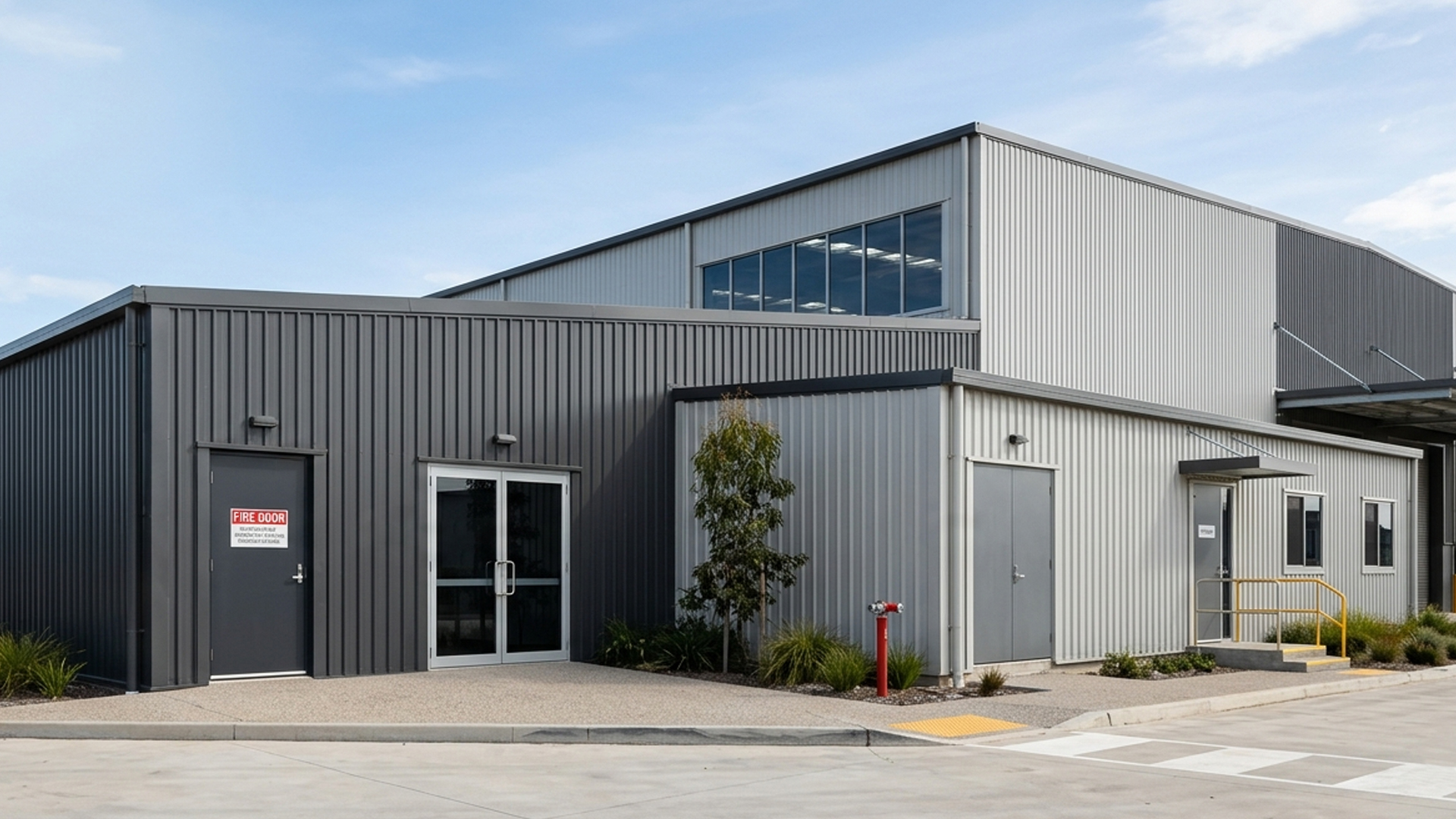

Commercial construction requirements continue to evolve across Australia, with increased focus on documentation, access control, fire separation, occupant safety, and project accountability.
For builders, facility managers, modular building suppliers, and project specifiers, 2026 is shaping up to be another year where door selection is becoming more connected to overall building performance, compliance strategy, and long-term operational planning.
While the National Construction Code (NCC), Australian Standards, and project-specific requirements remain the foundation of commercial door specification, the way these requirements are being interpreted and enforced is continuing to shift.
This guide explores the major commercial door compliance considerations influencing Australian projects in 2026, including fire-rated environments, modular infrastructure, industrial facilities, emergency egress, and documentation expectations.
Why Commercial Door Compliance Is Receiving More Attention in 2026
Across sectors such as:
- Warehousing
- Logistics
- Manufacturing
- Education
- Utilities
- Data centres
- Modular construction
- Government infrastructure
there is increasing scrutiny around:
- Door hardware configuration
- Fire separation strategy
- Escape and egress functionality
- Documentation and certification pathways
- Product suitability for application
- Long-term maintainability
Many project teams are now prioritising door systems that can be configured to support broader compliance objectives during both construction and ongoing facility operation.
This shift is especially noticeable in:
- Large industrial projects
- Transportable/modular buildings
- Mission-critical infrastructure
- Controlled environments
- High-traffic commercial facilities
1. Greater Focus on Application-Specific Door Selection
One of the biggest shifts in 2026 is the growing emphasis on selecting door systems based on actual operational conditions rather than simply choosing a standard commercial door.
Specifiers are increasingly evaluating:
- Exposure conditions
- Traffic frequency
- Internal vs external use
- Thermal performance considerations
- Access requirements
- Hardware compatibility
- Maintenance accessibility
- Future upgrade flexibility
For example, a personal access door used within:
- a warehouse,
- modular building,
- food processing facility,
- or utility enclosure
may require different hardware preparation, sealing configurations, core materials, or frame options depending on the environment and intended use.
As a result, many commercial projects are moving toward configurable door systems designed to support varied site conditions and project specifications.
2. Fire-Rated Door Requirements Continue to Influence Specification
Fire-rated environments remain a major consideration across Australian commercial construction.
In 2026, project teams are placing stronger focus on:
- Correct hardware compatibility
- Frame integration
- Door leaf configuration
- Penetration management
- Documentation consistency
- Installation pathways
Importantly, fire-rated performance outcomes are not determined by the door leaf alone.
Final suitability can depend on factors such as:
- hardware selection,
- wall system compatibility,
- installation method,
- glazing configuration,
- sealing systems,
- and overall assembly design.
Because of this, many builders and specifiers are seeking door systems that can be configured to support project-specific fire separation strategies while aligning with relevant certification pathways and engineering requirements.
3. Modular & Transportable Buildings Are Driving New Compliance Discussions
Australia’s modular construction sector continues to expand across:
- Mining
- Education
- Healthcare
- Defence
- Remote infrastructure
- Data centres
- Temporary accommodation
- Site offices
This has increased demand for commercial door systems designed to support:
- transportability,
- durability,
- simplified installation,
- and adaptable hardware configurations.
In modular environments, compliance considerations can extend beyond the door itself and may include:
- transport loads,
- structural movement,
- repeated installation cycles,
- environmental exposure,
- and operational flexibility.
As a result, many project teams now prioritise pre-hung door systems and configurable assemblies that can integrate more efficiently into modular construction workflows.
4. Documentation & Traceability Expectations Are Increasing
Another major shift in 2026 is the growing importance of documentation readiness.
Builders, certifiers, and facility operators are increasingly seeking:
- clearer product information,
- hardware schedules,
- installation guidance,
- certification documentation,
- and maintenance visibility.
This trend is partly driven by:
- increased project accountability,
- evolving procurement standards,
- insurance considerations,
- and audit preparedness.
Commercial door suppliers are now expected to provide more detailed technical support throughout the project lifecycle.
For many commercial projects, early coordination between:
- builders,
- architects,
- certifiers,
- and door suppliers
can help reduce specification changes later in the build process.
5. Emergency Egress Planning Is Becoming More Integrated
Emergency exit functionality remains a key consideration across industrial and commercial projects.
In 2026, more facilities are being designed around:
- occupant flow,
- controlled access,
- operational zoning,
- and emergency evacuation planning.
This means door systems are increasingly being selected based on how they interact with:
- access control systems,
- panic hardware,
- escape pathways,
- and facility operations.
Depending on the application, commercial doors can be configured with:
- escape hardware,
- lever systems,
- closers,
- seals,
- and compatible locking arrangements
to support project-specific operational and safety objectives.
Final compliance outcomes will typically depend on the complete door assembly, hardware configuration, installation method, and applicable project requirements.
6. Industrial Facilities Are Prioritising Long-Term Reliability
Industrial environments continue to demand durable door systems capable of supporting:
- high-frequency use,
- environmental exposure,
- operational movement,
- and ongoing maintenance access.
In 2026, many operators are prioritising commercial door solutions designed to support:
- simplified servicing,
- hardware replacement accessibility,
- corrosion resistance options,
- configurable sizing,
- and adaptable installation pathways.
This is especially relevant for:
- warehouses,
- logistics hubs,
- factories,
- storage facilities,
- and utility infrastructure.
Door systems designed for industrial environments may also be configured with different core materials, cladding options, hardware preparations, and frame designs depending on the operational application.
What Builders & Specifiers Should Review in 2026
When evaluating commercial door systems this year, project teams may benefit from reviewing:
Application Requirements
- Internal vs external use
- Exposure conditions
- Traffic frequency
- Operational workflow
Door Configuration
- Single or double door layouts
- Fire-rated or non-rated options
- Frame integration
- Hardware compatibility
Compliance Pathways
- Project certification requirements
- NCC considerations
- Emergency egress planning
- Installation requirements
Long-Term Operations
- Maintenance access
- Hardware servicing
- Replacement planning
- Operational flexibility
Commercial Door Compliance Is Becoming More Project-Specific
One of the clearest trends in 2026 is that commercial door specification is becoming less about one-size-fits-all solutions and more about application suitability.
Across Australia, builders and facility operators are increasingly seeking:
- configurable systems,
- technical support,
- clearer documentation,
- and door solutions designed to integrate into broader project requirements.
This is particularly relevant in sectors such as:
- modular infrastructure,
- industrial construction,
- controlled environments,
- mission-critical facilities,
- and commercial developments with evolving compliance demands.
Planning a Commercial or Modular Building Project?
Selecting the right commercial door system can depend on:
- building classification,
- operational requirements,
- environmental conditions,
- hardware configuration,
- and project-specific compliance pathways.
Larnec supplies Australian-made personal access door solutions designed for a wide range of commercial, industrial, and modular building applications, including configurable options for fire-rated and non-rated environments.
If you’re reviewing specifications for an upcoming project, the team can help discuss suitable configurations, hardware options, and application considerations based on your project requirements.
Frequently asked questions
Commercial door compliance generally refers to how a door system aligns with applicable building, fire safety, access, and operational requirements for a specific project. Requirements can vary depending on building classification, hardware configuration, fire separation strategy, installation method, and intended application.
Not all commercial buildings require fire-rated doors in every location. Requirements typically depend on factors such as building design, fire compartmentation strategy, NCC considerations, and project-specific certification pathways.
Builders may consider:
- Intended application
- Internal or external exposure
- Hardware compatibility
- Emergency egress requirements
- Fire-rated or non-rated configurations
- Maintenance access
- Installation method
- Long-term operational suitability
Final suitability can depend on the complete door assembly and project-specific requirements.
Modular and transportable buildings can introduce different operational and structural considerations compared to traditional construction. Many projects now prioritise configurable door systems designed to support transportability, installation efficiency, durability, and adaptable hardware integration.
Suitability may depend on:
- Traffic frequency
- Environmental exposure
- Door size and configuration
- Core material options
- Hardware selection
- Frame integration
- Building classification
- Installation conditions
- Ongoing operational requirements
Many commercial door systems are available with configurable options depending on project requirements. This can include hardware preparation, frame styles, core materials, seals, glazing options, and application-specific configurations.
Commercial construction projects are placing increased focus on documentation visibility, certification pathways, audit readiness, and product traceability. Builders and facility operators are increasingly seeking clearer technical documentation and installation information during procurement and handover stages.