



%402x.svg)
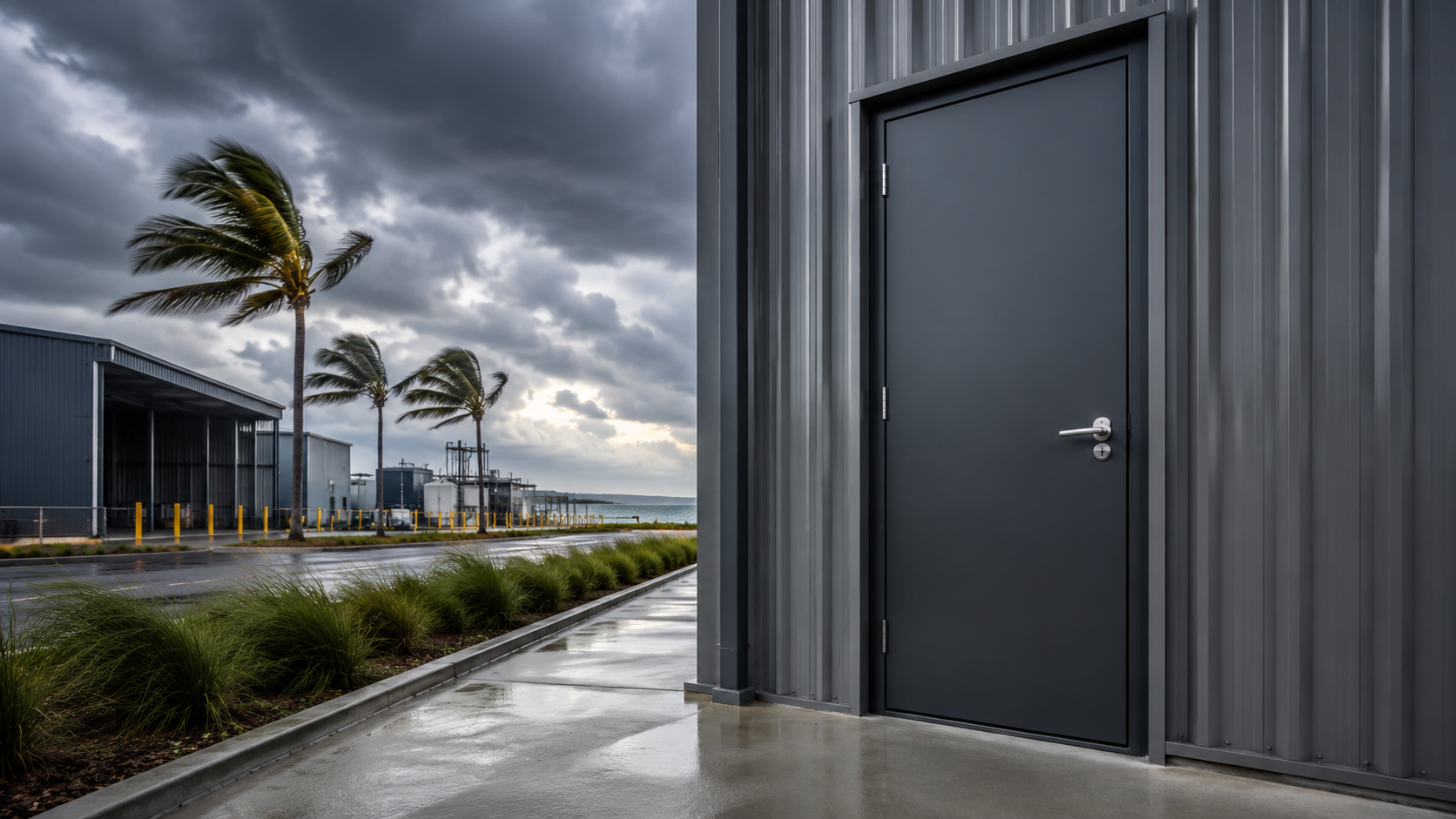

Australia’s severe weather conditions can place significant demands on building components, particularly in cyclone-prone regions. Selecting an appropriate cyclone-rated door is often an important consideration for industrial facilities, modular buildings, transportable structures, sheds, warehouses, and commercial projects exposed to extreme wind events.
This cyclone rated door guide explains what cyclone ratings are, where cyclone-rated doors are commonly used, key specification considerations, and how different door options can be configured to support project requirements.
What Is a Cyclone Rated Door?
A cyclone rated door is a door system that has been designed and tested to withstand specified wind pressures associated with cyclonic weather conditions.
Rather than referring only to the door leaf itself, performance outcomes are typically influenced by the complete door assembly, including:
- Door leaf construction
- Door frame design
- Hinges and fixings
- Locking systems
- Installation methodology
- Building structure integration
Because performance is dependent on the entire assembly, cyclone suitability can vary depending on the final configuration and project application.
Why Cyclone Ratings Matter
In regions exposed to extreme weather events, building openings can represent critical points within the building envelope.
Appropriately specified cyclone rated doors can be configured to support:
- Resistance to high wind pressures
- Building envelope performance objectives
- Modular and transportable building applications
- Infrastructure and utility projects
- Long-term durability expectations in demanding environments
The most suitable solution often depends on site conditions, building classification, exposure category, hardware requirements, and engineering specifications.
Where Are Cyclone-Rated Doors Commonly Used?
Cyclone-rated doors are frequently specified across a broad range of industries and building types.
Industrial Facilities
Warehouses, factories, workshops, and processing facilities may utilise cyclone-rated personal access doors where exposure to severe weather conditions is a design consideration.
Modular Buildings
Modular and transportable structures often require durable door systems that can be integrated into factory-built construction methods while supporting transportation and installation requirements.
Mining and Resources Projects
Remote infrastructure projects may require door systems designed to support demanding environmental conditions, including exposure to high winds, dust, and operational wear.
Agricultural Buildings
Farm sheds, equipment storage facilities, and rural infrastructure may benefit from cyclone-rated door options where regional weather conditions warrant additional wind resistance considerations.
Infrastructure Projects
Utilities, telecommunications, water treatment facilities, and infrastructure buildings may specify cyclone-rated door systems as part of broader asset protection strategies.
Key Features to Consider
Not all cyclone-rated doors are identical. Comparing available options can help project teams identify a suitable solution for their application.
Important considerations may include:
Door Construction
Fully steel-clad door systems can provide durability and strength characteristics suited to industrial and commercial environments.
Pre-Hung Design
Pre-hung door assemblies can simplify installation processes by providing a complete door and frame package.
Wind Rating Performance
Different door systems are designed and tested to varying wind pressure levels. Understanding project requirements and engineering specifications is important when evaluating options.
Hardware Compatibility
Door performance can be influenced by the selected hardware configuration. Locksets, closers, hinges, panic hardware, and additional accessories may affect final system suitability.
Opening Direction
Depending on building design and operational requirements, doors may be configured for inward or outward opening applications.
Understanding the Difference Between Standard and Cyclone Rated Doors
A standard industrial access door may be suitable for many applications, however projects located within cyclone-prone regions often require additional consideration.
Cyclone rated door systems are generally designed with greater emphasis on:
- Wind pressure resistance
- Door frame strength
- Hardware integration
- Structural attachment methods
- Testing and verification processes
The appropriate solution should always be assessed against project-specific requirements.
Selecting the Right Cyclone-Rated Door
When comparing cyclone-rated door options, it can be helpful to consider:
Project Location
Regional wind classifications and environmental conditions can influence specification requirements.
Building Type
Industrial buildings, modular structures, infrastructure facilities, and agricultural buildings may have different operational priorities.
Usage Requirements
Door frequency of use, access control requirements, maintenance considerations, and traffic levels can all influence product selection.
Future Flexibility
Some door systems can be configured with additional hardware, insulation options, or project-specific features that support future operational needs.
Cyclone Rated Doors for Modular and Transportable Buildings
The growth of modular construction across Australia has increased demand for cyclone-rated access solutions that integrate efficiently into prefabricated building systems.
For modular projects, considerations may include:
- Factory installation requirements
- Transportation loads
- Site installation efficiency
- Durability during relocation
- Building envelope integration
Selecting a door system designed to support modular construction can help streamline project delivery while aligning with broader design objectives.
Choosing a Cyclone-Rated Door for Your Project
Selecting a cyclone-rated door involves balancing environmental conditions, operational requirements, building design, and specification objectives.
While no single solution suits every application, door systems designed and tested for cyclone-prone environments can provide options for projects requiring enhanced wind resistance characteristics.
If you’re evaluating cyclone rated door options for an industrial, commercial, modular, infrastructure, or agricultural project, obtaining project-specific advice from our team can help identify a configuration suited to your intended application, site conditions, and operational requirements.
Frequently asked questions
What is a cyclone rated door?
A cyclone rated door is a door system designed and tested to withstand specified wind pressures associated with cyclonic weather conditions. Performance is typically influenced by the complete door assembly, including the door leaf, frame, hardware and installation method.
Where are cyclone rated doors commonly used?
Cyclone rated doors are commonly specified for industrial facilities, modular buildings, transportable structures, warehouses, agricultural buildings, mining projects and infrastructure applications located in areas exposed to severe weather conditions.
Are all industrial doors cyclone rated?
No. Industrial doors are available in a wide range of designs and performance levels. Cyclone-rated options are typically specified where wind resistance is an important project requirement.
Can cyclone rated doors be customised?
Many cyclone-rated door systems can be configured with different hardware, finishes, insulation options, and accessories depending on project requirements and tested system limitations.
Does the door alone determine cyclone performance?
Performance is generally influenced by the complete door assembly, including the frame, hardware, installation method, and integration with the surrounding structure.
Are cyclonerated doors suitable for modular buildings?
Many cyclone-rated door systems are commonly specified for modular and transportable building applications, subject to project requirements and final configuration.
What should be considered when selecting a cyclone rated door?
Key considerations may include project location, wind classification, building type, hardware requirements, installation methodology, door usage and overall project specifications.