



%402x.svg)
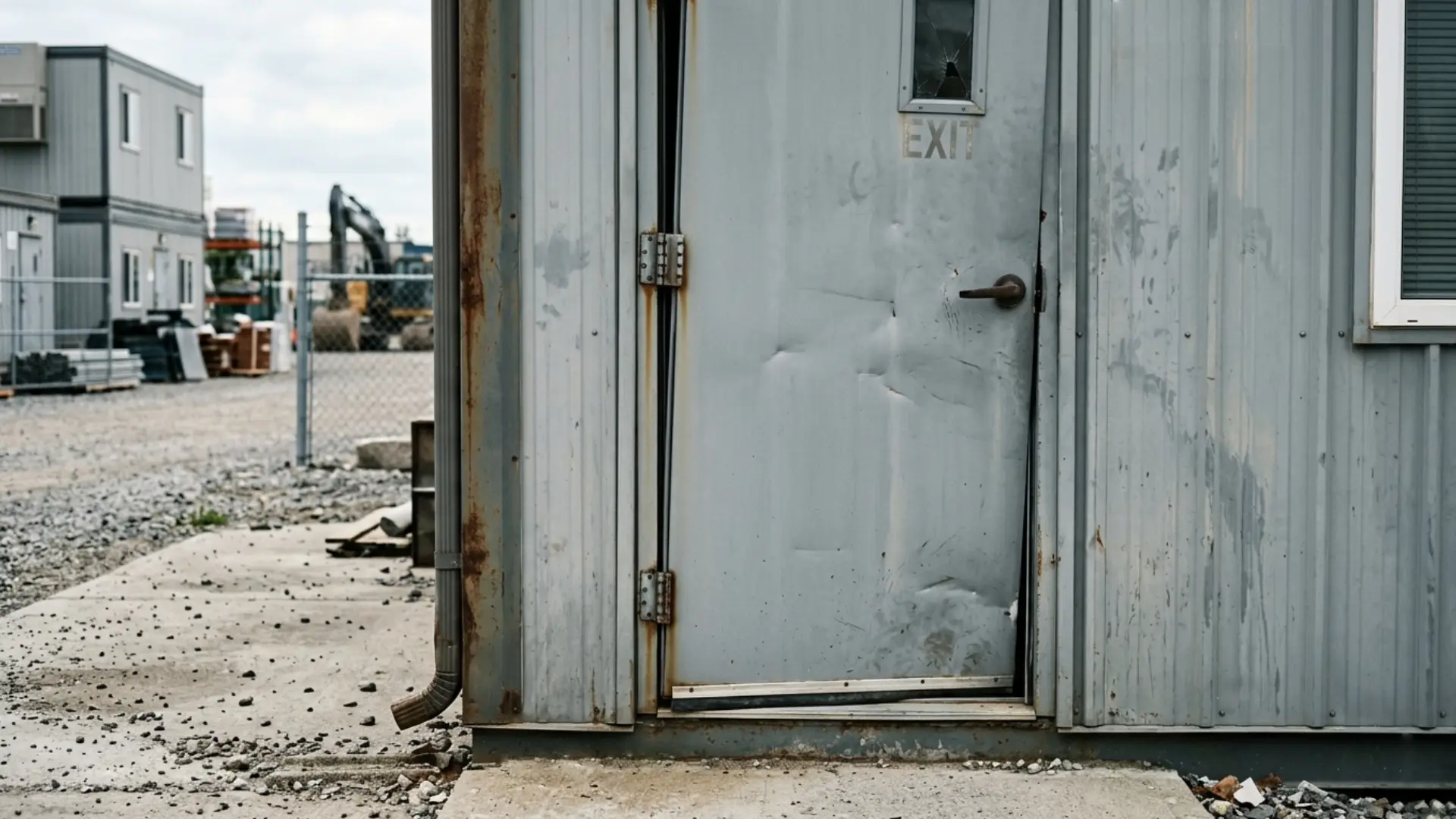

Quick Answer: Common Door Failures in Modular Building
Common door failures in modular buildings typically include misalignment after transport, hardware wear, poor sealing, surface damage, and selecting a door system not suited to the application. These issues can often be reduced by choosing door options that are designed to support transport conditions, usage levels, and environmental exposure—depending on configuration, hardware, and installation.
What Causes Door Failures in Modular Buildings?
Door performance in modular buildings can vary due to:
- Repeated transport and relocation
- Structural movement in portable units
- Environmental exposure (dust, moisture, coastal conditions)
- Frequency of use
Because of this, door systems are often required to be configured for specific applications, rather than relying on a single standard setup.
Most Common Door Failures (Explained)
1. Door Misalignment After Transport
What happens:
Doors may become difficult to close or latch properly.
Why it occurs:
- Frame movement during transport
- Structural flex in modular units
- Standard hinges not suited for relocation
What can help:
Door systems can be configured with:
- Pre-hung assemblies designed for modular use
- Reinforced frames and hinge options
- Allowances for on-site adjustment
Some door options are designed to support repeated transport conditions, depending on how they are specified.
2. Premature Hardware Wear
What happens:
Locks, hinges, and handles wear faster in high-use environments.
Why it occurs:
- Frequent daily use
- Exposure to dust or moisture
- Hardware not suited to application
What can help:
- Commercial-grade hardware options
- Finishes suited to environmental conditions
- Replaceable or upgradable components
Hardware selection can significantly influence long-term performance.
3. Poor Sealing and Weather Ingress
What happens:
Air, water, or dust may enter through gaps.
Why it occurs:
- Frame distortion over time
- Inconsistent installation
- Limited sealing systems
What can help:
- Perimeter seals and threshold options
- Door designs suited to external environments
- Proper installation alignment
Weather resistance can vary depending on seals, door construction, and installation.
4. Surface Damage and Corrosion
What happens:
Doors show signs of wear such as dents, coating breakdown, or corrosion.
Why it occurs:
- Harsh site conditions
- Transport handling
- Material choice
What can help:
- Steel-clad door options with protective coatings
- Finishes selected for environmental exposure
- Configurations suited to industrial or coastal use
- Consider enhanced protection systems like Sentry Protect, designed to improve durability and resistance in harsh environments
Material and finish selection should align with the environment.
5. Inadequate Door Strength for Application
What happens:
Doors may not perform as expected under frequent or demanding use.
Why it occurs:
- Lightweight construction in high-demand environments
- Mismatch between door type and usage
What can help:
- Core options that balance insulation and rigidity
- Reinforced skins and frames
- Application-specific configurations
Suitability depends on how the door is specified for the intended use.
6. Incorrect Door Selection for Project Requirements
What happens:
The door may not align with project needs.
Why it occurs:
- Assumptions during early specification
- Lack of clarity on requirements
What can help:
- Selecting door systems that can be configured
- Reviewing application needs early
- Aligning hardware and door type with usage
There is no one-size-fits-all solution—configuration matters.
How to Choose a More Suitable Door Option
When selecting a door for modular buildings, it can help to consider:
- Frequency of transport
- Environmental exposure
- Usage levels
- Hardware requirements
Many door systems are designed to support different combinations of:
- Core types
- Skins and finishes
- Hardware options
- Frame construction
This flexibility allows the door to be configured based on the application.
Key Takeaways
- Door failures in modular buildings are often related to transport, usage, and environment
- Performance can vary depending on configuration, hardware, and installation
- Common issues include misalignment, hardware wear, sealing gaps, and surface damage
- Door systems can be configured to better support specific applications
- Selecting the right combination of door, frame, and hardware can help reduce long-term issues
Need Help Choosing the Right Door?
If you’re working on a modular building project and want to explore door options that can be configured for your specific application, it may help to get input early in the process.
A practical discussion around usage, environment, and configuration can often clarify which options are more suitable—without locking you into a one-size-fits-all approach.
Feel free to get in touch if you’d like to explore suitable door options for your project.
Frequently asked questions
Common door failures in modular buildings can include misalignment after transport, hardware wear, poor sealing, and surface damage. These issues often depend on how the door system is configured, installed, and used within the application.
Door misalignment can occur due to structural movement during transport, frame shifting, or repeated relocation. Door systems designed to support modular applications may include features that allow for adjustment after installation.
Hardware wear can be influenced by usage frequency and environmental conditions. Selecting hardware options suited to the application, along with appropriate finishes, can help support longer-term performance.
Gaps or sealing issues may result from frame movement, installation inconsistencies, or environmental exposure. Sealing performance can vary depending on door design, seal types, and installation quality.
Not all doors are suited to modular applications. Door suitability depends on factors such as transport frequency, environment, and usage. Many door systems can be configured to better align with these requirements.
Choosing the right door depends on the intended use, environmental exposure, and hardware requirements. Exploring configurable door options can help align the system with the specific application.