

%402x.svg)
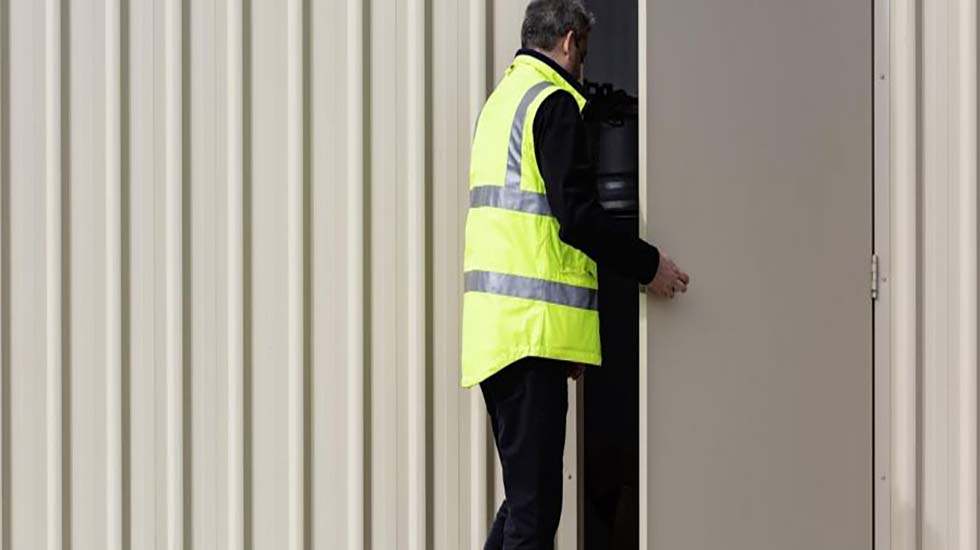

A personal access door is the first line of defence for unauthorised access to your industrial or commercial building. The most basic threat is from an opportunist using manual force to access the building. However, sophisticated intruders can use power tools and other techniques to break through your access door. It is vital to choose the right security rating for your industrial door that matches your facility’s expected threat. When selecting industrial doors, the right security rating is crucial for ensuring protection. In some industrial settings, non fire rated doors are preferred for areas where fire protection isn’t mandatory, but high-level security is still required. Ensure compliance with security door ratings by referring to the Australian Standards for Industrial Doors.
Larnec is a family-owned business with more than 20 years of history in the personal access door industry. Find out more about our industrial doors by getting in touch with our friendly customer service team.
Factors affecting industrial door security
There are several factors that will affect the overall security level of your industrial door. Here are some of the top things to consider:
1. Construction of the door
Personnel access doors built with security in mind are metal doors with sturdy construction. The type of frame, the thickness of the metal plate, the wrapping of the plate on the frame, or the single/dual skin design all play a role in the door’s strength.
For example:
- Tube frames are more robust than braced doors.
- Single skin doors do not offer the same protection as fully wrapped doors.
- A 40mm plate is not as resistant to impact as a plate that is 45mm thick.
The connection between frame and structure
Even if the door construction is of the highest standard, the frame’s attachment to the structure of the building may introduce a weak point in terms of security. There are many different construction methods, and each has its own security issues to bear in mind.
One of the most secure forms of attachment is when the door frame is one with the structure. Manufacturers can cast it in a panel of a tilt-up building or weld metal frames into a metal structure. This design is effective for modifying containers.
There are also secure methods of attaching frames to the structure in retrofit installations. Wire ties, Fastfix, stud clips, and others are all secure attachment methods as long as qualified and trained installers install them.
Personal access door frames come in three-sided jamb models or four-sided jambs. The additional jamb provides an extra level of support, but it is not always possible to include a jamb at the door’s base.
Hinges and Locks
Hinges should not be overlooked when considering the security of an industrial door. Personal access doors should have at least three hinges so that even if one hinge breaks, the other two will prevent someone from gaining access. Designers should select the size and strength of the hinge based on the anticipated threat to the building.
Locking mechanisms are a critical security feature for industrial doors. However, some locks prevent a door from being used as an escape route in an emergency. Therefore, both security and safety must be considered when choosing the locking mechanism.
Here are some accessories to consider:
- Deadbolts have single or double cylinders. Double cylinders require keys on both sides, which is a hazard for safe exit in an emergency.
- Lockable thumb turns can overcome this drawback and provide a safer exit.
- Panic bars are commonly used on emergency exits to allow the free flow of people during evacuations.
Industrial doors from Larnec
Larnec supplies a range of doors for industrial applications. We offer standard models and sizes, as well as bespoke solutions that are custom made to your needs.
Sentry 200.TP

The Sentry 200.TP door is made for tilt panel buildings. They can be retrofitted on-site without precasting a frame into a panel using a dual quad fastening system. The four-sided frame has reverse handing making it easy to install in any configuration. Sentry 200.TP doors are fully steel clad, wrapped and sealed, and built to suit 150 mm panels.
Sentry 200.47
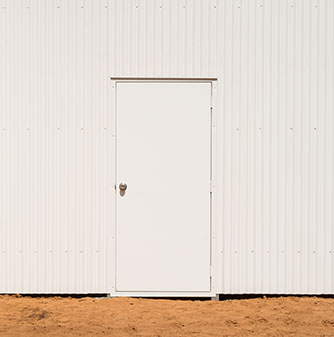
The Sentry 200.47 door is the market-leading industrial personal access door for garages, warehouses and industrial buildings. It is compliant with AS/NZS 1170.2.2011 and AS 4055-2012 standards for wind resistance. The Sentry 200.47 is prepped for a lockset and door closers. It is also a fully steel clad, wrapped and sealed door, which can be configured for inward opening when external clearance is too tight. For businesses looking for extra protection, a sentry-rated door offers an additional level of security.
Sentry 200.80

The Sentry 200.80 is a three-sided personal access door with a frame that fits into many different wall applications. This door is dual skin and fully steel clad. It offers a versatile solution with perimeter door seals and threshold plates to prevent weather and dust penetration. In warehouse environments, it’s important to choose a door that offers both durability and security.
Contact Larnec for your secure industrial door
Larnec is a family-owned business with a 20-year track record in Australia. We have pioneered the personal access door industry in Australia and offer high-quality products and services for industrial applications.
Our personal access industrial doors have the security ratings you need to resist your facility’s leading threats. If we don’t have a standard solution in stock, we will design one to meet your needs.