
%402x.svg)
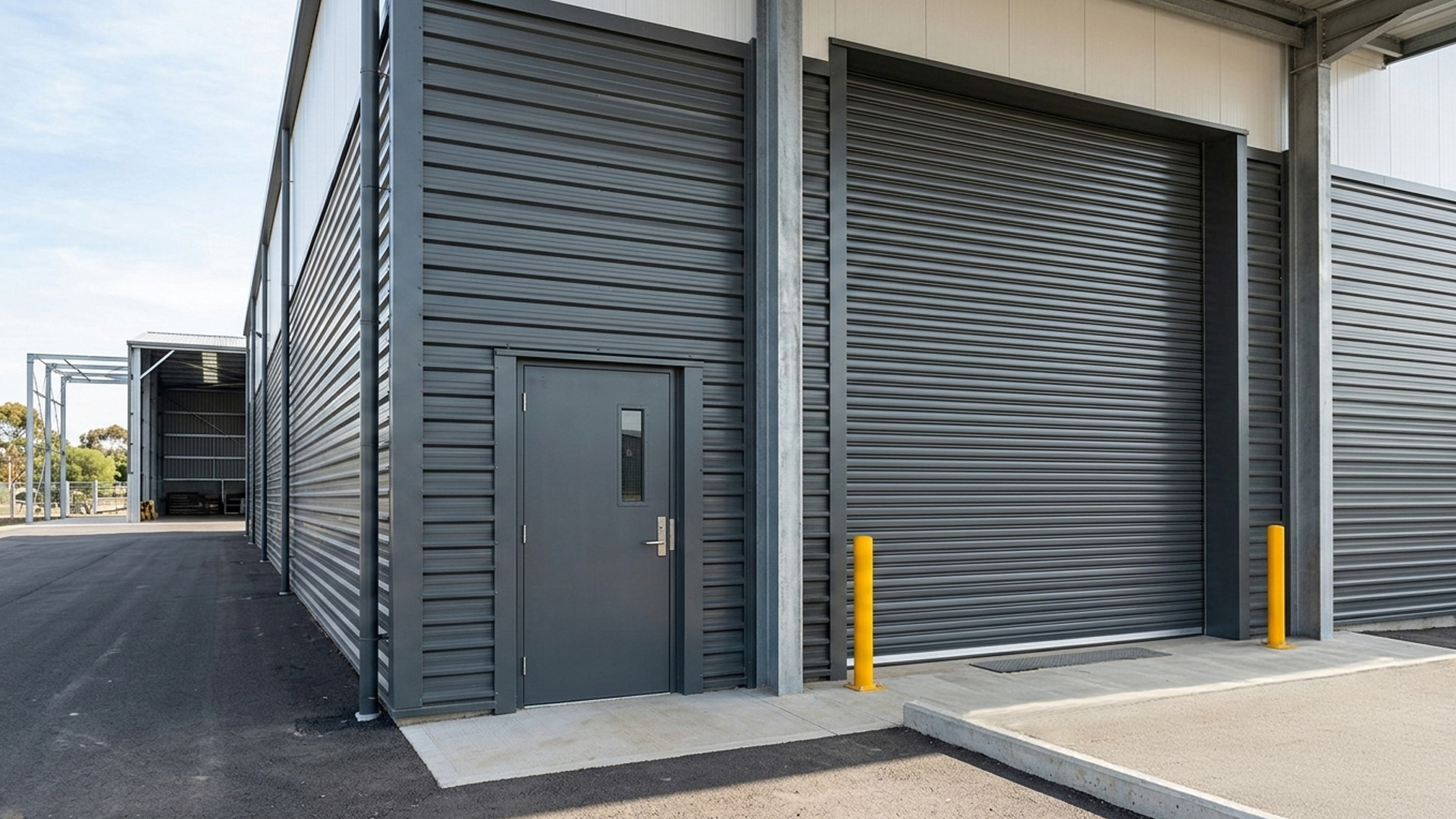

Industrial buildings such as warehouses, workshops, and farm sheds often require access solutions that balance convenience, durability, and day-to-day practicality. One option commonly used in these environments is an industrial personal access door.
Rather than relying on a large main door for every entry or exit, a dedicated pedestrian door can support easier movement for staff and occupants. This approach can reduce unnecessary opening of large doors and may help improve operational efficiency in many industrial buildings.
This guide explains what industrial personal access doors are, where they are commonly used, and factors to consider when selecting one for a particular building or application.
What Is an Industrial Personal Access Door? (Quick Answer)
An industrial personal access door is a pedestrian door designed for use in industrial and commercial buildings such as warehouses, sheds, and workshops. It provides a separate entry point that allows people to enter and exit a building without operating a large industrial door.
Depending on the configuration and hardware used, these doors can support convenient access, controlled entry, and efficient day-to-day operation in many industrial environments.
What Is an Industrial Personal Access Door?
An industrial personal access door is a door system intended to provide pedestrian access within industrial or commercial buildings. These doors are typically installed beside or integrated into larger openings used for vehicles, equipment, or loading operations.
They are commonly manufactured using steel construction and may be supplied as a pre-hung unit to support more straightforward installation.
Typical design features can include:
- steel construction
- pre-hung door frames
- heavy-duty hinges
- configurable locksets and hardware
- weather-resistant finishes suitable for outdoor environments
Specific performance characteristics will depend on the door model, hardware selection, and installation conditions.
Why Warehouses and Sheds Use Personal Access Doors
Large industrial doors are usually designed for equipment access, vehicle movement, or loading operations. Opening these doors frequently for pedestrian access may not always be practical.
Personal access doors provide an alternative entry point that can support more efficient movement within a building.
Depending on the building layout and configuration, they may offer advantages such as:
- reduced need to operate large doors for pedestrian access
- more convenient entry and exit for staff
- improved operational flow in busy workplaces
- potential reductions in air exchange when large doors remain closed
The suitability of this approach will depend on the specific building design and operational requirements.
Common Applications
Industrial personal access doors are used across a range of commercial and industrial environments. Typical applications include:
- industrial warehouses
- manufacturing facilities
- storage and logistics buildings
- commercial workshops
- agricultural and farm sheds
- garages and utility buildings
Door configuration, hardware, and installation method can be selected based on the needs of each building and the level of use expected.
Key Features to Consider
When evaluating industrial personal access doors, several design and configuration factors are typically considered.
Durable Construction
Industrial environments often involve frequent use and exposure to changing conditions. Steel-clad doors and metal-framed assemblies are commonly used because they are designed to support long-term durability in these environments.
Locking Hardware Options
Access control requirements can vary between buildings. Personal access doors can often be configured with different locksets or hardware options depending on the level of access control required.
Pre-Hung Door Systems
Some industrial doors are supplied as pre-hung assemblies, meaning the door leaf and frame are provided together. This configuration can simplify installation depending on the project requirements.
Weather-Resistant Finishes
For external applications, finishes and materials are often selected to support resistance to weather exposure such as rain, wind, and temperature variation.
Performance will depend on the specific product specification and installation environment.
Building Standards and Considerations
Industrial door installations may be influenced by building regulations and project specifications.
In Australia, construction and safety frameworks are outlined in the National Construction Code, alongside guidance developed by Standards Australia.
Depending on the building type and application, these frameworks may influence areas such as:
- fire safety provisions
- accessibility requirements
- structural performance considerations
- wind and environmental exposure
Final requirements typically depend on the building design, engineering specifications, and selected door system.
Selecting a Door for Your Building
Because every building has different operational requirements, the most suitable door configuration will depend on the project specifications, environment, and intended use.
If you are planning a warehouse, shed, or commercial building project, discussing your requirements with an experienced supplier can help determine which door options may be appropriate for your application.
Choosing the Right Personal Access Door
Selecting an appropriate industrial personal access door usually involves evaluating several project-specific factors.
These may include:
- building type and intended use
- frequency of pedestrian access
- environmental exposure
- hardware and access control requirements
- installation location and structure
Different door models and configurations may suit different environments. Reviewing product specifications and discussing project requirements with us can help identify suitable options for a particular application.
Frequently asked questions
A personal access door provides a pedestrian entry point within an industrial or commercial building. It allows people to enter or exit without operating a large main door, which can support more convenient daily access depending on the building layout.
They are commonly installed in warehouses, workshops, factories, sheds, and other commercial buildings where regular pedestrian access is required.
Yes. Many industrial doors can be configured with a range of locksets or hardware options depending on the level of access control required for the building.
Yes. Personal access doors are often installed in agricultural sheds, garages, and storage buildings where a dedicated pedestrian entry point is practical.