

%402x.svg)
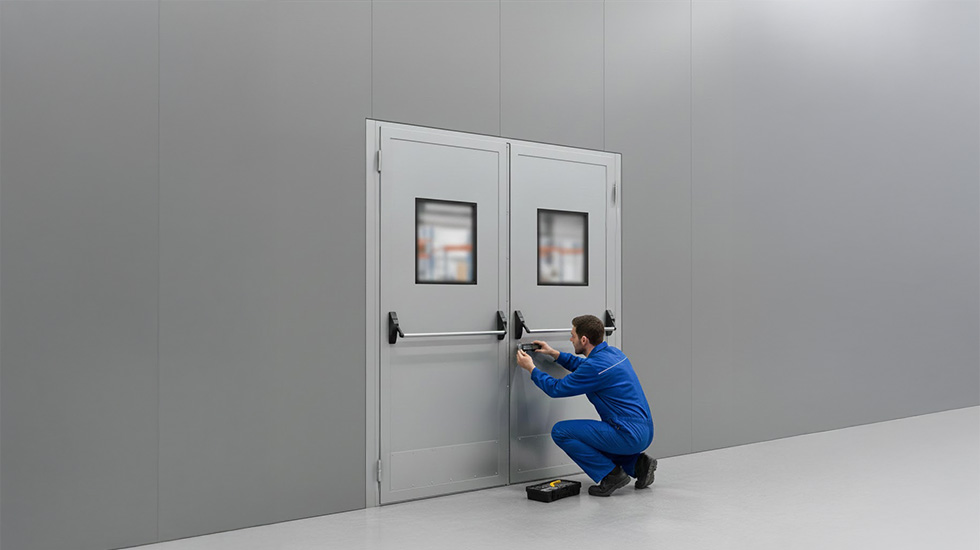

Fire-rated doors are built to last, but like any critical asset, their longevity depends on proper care and maintenance. A well-maintained fire door doesn’t just look good — it performs reliably when it matters most.
Regular Inspection and Maintenance
Set up a regular inspection schedule to check for damage, corrosion, or alignment issues. Pay attention to the hinges, seals, and latches, as these components play a key role in maintaining fire resistance. If the door doesn’t close properly or is obstructed, it may not perform effectively during an emergency.
Cleaning and Surface Protection
Fire doors, especially steel ones, should be kept clean and free from dust or debris. Regular cleaning prevents corrosion and maintains the powder-coated finish. For doors exposed to harsh weather or chemicals, applying a light protective coating can help prolong their lifespan.
Avoid Modifications or Damage
Never drill, cut, or modify a fire door without consulting a specialist. Even small alterations can compromise its integrity and performance. Always use compatible accessories and ensure that any added hardware meets the same fire-rated standards.
Partner with the Right Supplier
Working with a trusted supplier ensures you get doors that are built to perform and easy to maintain. At Larnec, our fire-rated doors are designed for durability and tested to meet strict Australian safety standards — offering both protection and peace of mind.
Contact Us
For advice on maintaining your fire doors or upgrading to a more durable model, contact us on 1800 527 632 or visit our contact page. Our team is ready to help you keep your fire-rated doors performing at their best.
Frequently asked questions
You can extend the lifespan of fire doors by ensuring proper installation, regular maintenance, and correct usage.
This includes routine inspections, keeping hardware functional, and avoiding modifications that may affect performance. Doors designed to support the intended application tend to maintain reliability over time.
Fire doors should be inspected regularly in line with building maintenance schedules and compliance requirements.
Routine checks typically include seals, hinges, and closing mechanisms to ensure proper function. Consistent maintenance helps identify issues early and supports long-term performance.
The most common issues include poor installation, lack of maintenance, and damage to critical components.
Problems such as worn seals, misaligned frames, or faulty hardware can affect both durability and performance. Addressing these issues early can help prevent premature failure.
Fire doors can sometimes be repaired if the damage does not affect their core performance or compliance.
However, significant damage to the door leaf, frame, or fire-resistant components may require replacement. Assessment should be based on whether the door can still support its intended function.
Durability is improved by features such as robust construction, quality hardware, and suitable core materials.
Fire doors designed for industrial applications may include reinforced components and finishes that support long-term use. Proper configuration helps maintain performance under demanding conditions.