

%402x.svg)

The Rise of Modular Construction and Portable Buildings
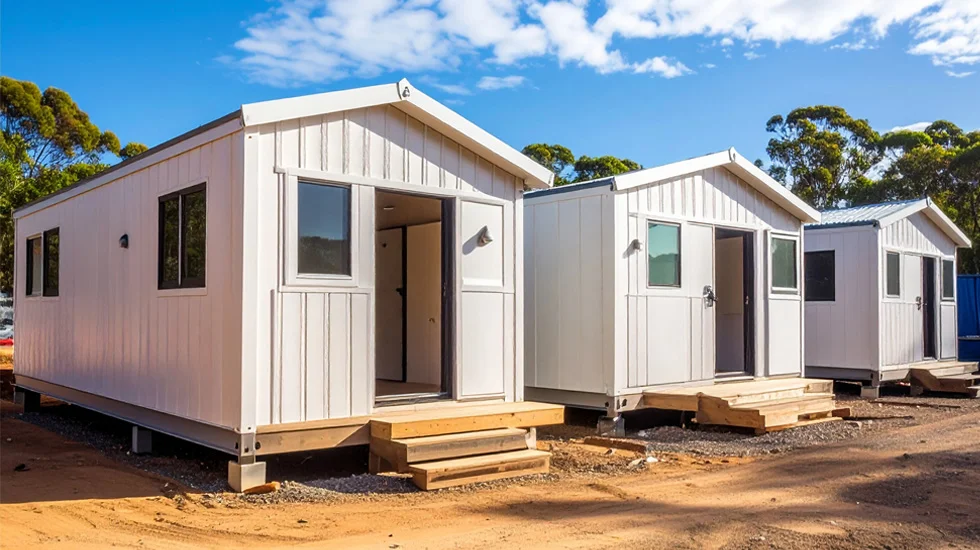
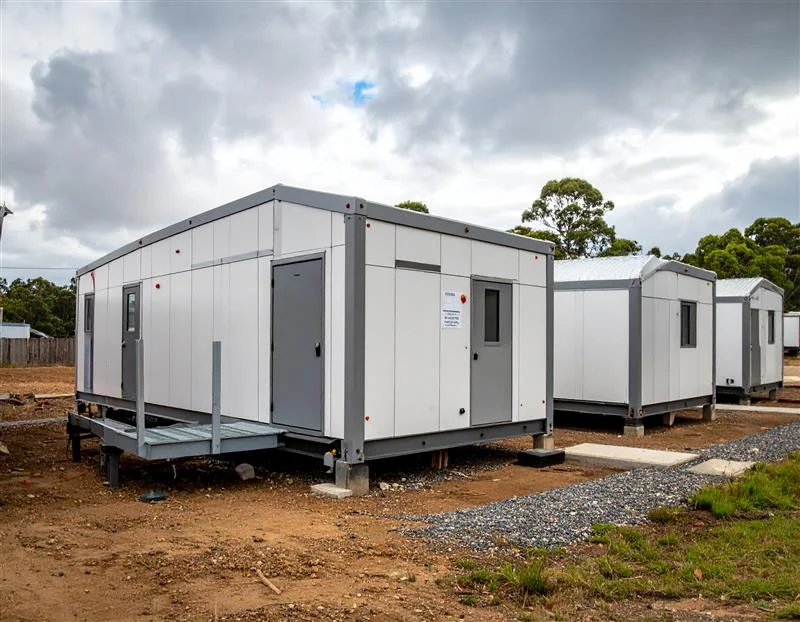
As Australia faces rising demand for faster, more flexible building solutions, portable and modular buildings have become the go-to answer across industries. From mining camps to construction site offices and remote accommodation, modular construction offers rapid deployment, cost-efficiency, and sustainability. But with this innovation comes an important question: How do we ensure these spaces meet the same safety standards as permanent structures?
In 2025, the answer starts with access and exit points—specifically, the doors.
Why Site Safety Starts with the Right Doors
Doors in portable and modular buildings are more than just entry points. They play a critical role in:
– Fire safety: Enclosures must meet fire-rated compliance standards such as AS1905.1.
– Access control: Site managers must ensure secure, lockable environments to protect personnel and equipment.
– Emergency egress: In temporary buildings, escape routes must be clear, compliant, and robust.
– Weather resistance: Doors must withstand harsh, remote conditions—dust, moisture, high wind loads, and more.
Compliance Challenges in Temporary Structures
Unlike traditional builds, portable buildings often face additional compliance risks:
– Non-compliant doors being retrofitted without proper testing
– Lack of visibility on fire and disability access standards
– Fast turnover on job sites leading to poor installation
This makes it vital for companies to work with trusted suppliers who understand NCC 2025, AS1428.1, and site-specific OH&S standards.
How Larnec Is Supporting Safer Modular Construction
At Larnec, we provide compliant, durable doors engineered specifically for portable and modular environments. Our range includes:
– Site office doors with reinforced steel and secure locksets
– Fire-rated doors tested to AS1905.1
– Personal access doors with easy integration into prefab units
– Cyclone-rated doors for harsh weather zones
We also offer custom options for:
– High wind regions (AS/NZS 1170.2)
– Disability-compliant thresholds (AS1428.1)
– Padlockable site storage and container conversions
Our doors are pre-hung, fully compliant, and ready to install—reducing setup time and improving safety from day one.
Who Benefits From Safer Modular Access Solutions?
– Construction & mining operators managing remote workforces
– Government and education providers rolling out temporary facilities
– Builders & fabricators offering transportable or relocatable buildings
– Facility managers looking to upgrade or replace doors in existing prefab structures
By improving the access infrastructure of modular buildings, these sectors ensure compliance, reduce liability, and improve site safety.
Final Thoughts: Safer Modular Spaces Start with Better Doors
The modular construction movement isn’t slowing down in 2025. But as these structures become more common, the expectation for safety and compliance grows too.
Larnec is proud to support this future with doors designed for safety, durability, and code compliance—no matter how temporary the structure may seem.