

%402x.svg)
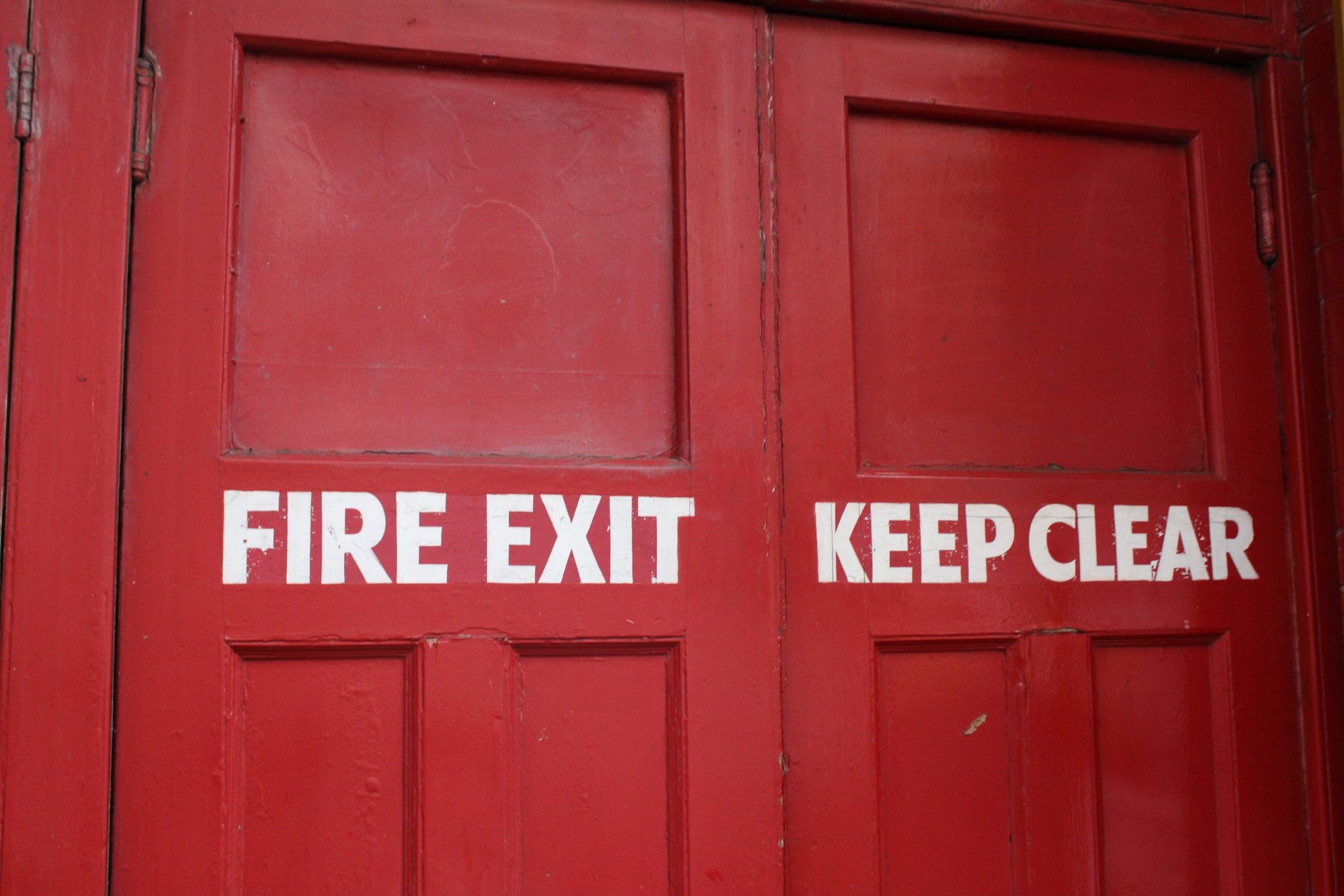

Larnec steel fire doors deliver exceptional protection, with fire ratings of up to four hours. Tested in accordance with Australian Standards AS1530 and AS1905, they’re engineered for environments where safety, security, and durability are non-negotiable.
Our steel fire doors are a trusted choice for high-traffic or high-risk areas such as commercial kitchens, hospitals, and industrial facilities. Resistant to extreme heat, impact, and contamination, they offer long-term performance and peace of mind—making them a smart investment for protecting people, property, and assets.
What Are Fire Rated Doors?
A fire door or fire-rated door is one that has a fire-resistant rating. These doors are used to reduce the spread of fire and prevent smoke from travelling between areas. Fire doors are an important part of any building because they can slow down the speed at which fires spread between rooms. They might be able to save your life or somebody else’s in case there was ever a fire.
A common misconception is that some doors are fire-proof. This is incorrect. There is no such thing as a fire-proof door that can completely withstand fire. Instead, fire-rated doors are used to measure the level of fire-resistance they offer.
Fire Doors & Fire Resistance Levels

Fire-rated doors are purpose-built to resist flames for a certain amount of time. The amount of time, through testing, determines the fire resistance level or FRL. A fire resistance level is given in 3 categories and will look like this: 30/60/120.
- Structural adequacy: the door will remain vertical and support the load for at least 30 minutes.
- Integrity: the door will block the flames passing through the door for 60 minutes.
- Insulation: the door will provide insulation from the heat, fire and smoke for 120 minutes. The room on the other side of the door will also not increase in temperature.
There are 4 ratings for each of the 3 categories.
- 30
- 60
- 120 (the highest score)
- – (non-load bearing door)
The first category, structural integrity, can also be given a dash. The rating could look like –/30/60. In this rating, the dash means the structural adequacy is a non-load bearing door however the fire door provides integrity and insulation.
Learn more about fire safety and the importance of fire doors from the Australian Fire Protection Association (FPA Australia).
All fire-rated doors are required to be installed with a compliance tag on the door and door jam. This tag contains the following information:
- Fire resistance level
- Name of manufacturer
- Number of performance (Australian standard)
- Serial number
- Year of manufacture
Types of Fire-Rated Doors
Steel doors
Metal doors, like steel doors, can provide up to four hours of fire protection in comparison to 30-60 minutes from non-metal ones. The standard for this type has been verified following the testing procedure specified by Australian Standards AS1530 and AS1905.
Steel fire doors are perfect for environments where increased security or hygiene requirements must be met. They can easily withstand high levels of heat and contamination, making them a popular choice in kitchens that typically experience greater levels than other areas such as hospitals; this makes these durable metal products an excellent investment.
Timber fire doors
Timber fire doors combine classic aesthetics with tested fire resistance. Built from solid-core timber and finished to suit your project’s style, they’re ideal for commercial, industrial, and multi-residential applications where safety and appearance matter. Designed to meet Australian Standards, these doors help contain fire and smoke, buying valuable time for evacuation while complementing interior design.
Fire-Rated Door Regulations

Installation
Currently, there is no legal requirement for installing fire-rated doors. However, the slightest gap between a fire door, door frame, glasswork or seal will cause the door to become faulty. As a result, it will not meet the BCA requirements and Australian Standards for fire safety.
Door frames
The door frame is one of many door hardware components that make up a fire exit. They’re usually purchased from either the manufacturer or someone who specialises in this type of installation. There may be situations where you are unable to instal new seals or door frames.
In these situations, commercial or industrial properties can opt to fit intumescent seals into the door edge. This is often the case where there is gap between the fire door and the door frame. The gap must be no more than 3 mm.
Non-Fire-Rated Doors
The exterior of a non-fire-rated door can be the same as a fire-rated one. However, these doors have not passed strict testing for their fire-resistance levels as well other Australian Standards for fire safety.
The durability of these doors makes them ideal for everyday use, but they do not offer any real protection in the case of fire. As flames spread through a non-fire-rated door it’s quickly consumed allowing the fire to keep spreading throughout your property.
Commercial Doors For All Industries
Not all doors in your commercial building need to be fire-rated. Commonly, the ones used as an escape route will be fire-rated doors. We provide a wide range of doors from metal doors and double doors to commercial doors and more.
If you’re a property owner for residential buildings or a single commercial building, Larnec can help you find high-quality, durable and safe dooring solutions. We specialise in personal access and commercial doors for a range of industries and buildings including: